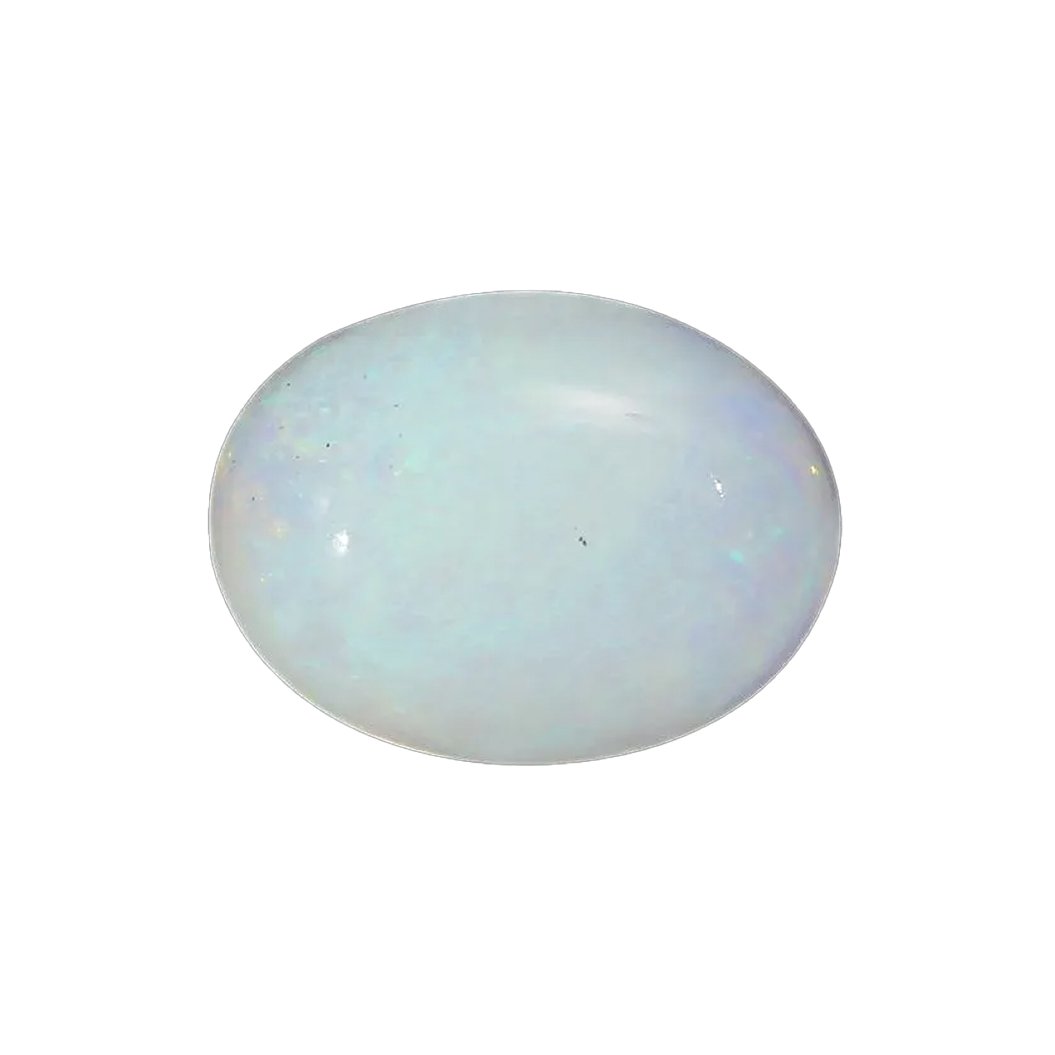
From Roman treasure to Victorian fear
The Romans thought opal one of the most precious gems of all, because it seemed to hold the colours of every other stone. Around AD 75 Pliny the Elder wrote that some opals carried a play of colour to rival the richest paints of an artist. Bedouin storytellers said opals fell from the sky in flashes of lightning.
Then came Scott’s novel, in which an opal is tied to a character’s misfortune. Readers took it to heart, and the idea that opal is unlucky, especially for anyone not born in October, spread widely in the nineteenth century. Historians of gem lore are clear that it was a literary invention, not an old tradition.
Opal stone meaning: light trapped in silica
Opal is not a crystal at all. It is hardened silica gel with water held inside, often up to around a fifth of its weight. In precious opal, the silica sits in tiny spheres stacked in orderly rows. When light passes between them it splits into colours, which is why the flashes move as you tilt the stone. It is a different effect from the soft glow of moonstone or the metallic flash of labradorite. Bigger spheres can show every colour, while smaller ones only show blues and greens.
Common opal has the same chemistry but no ordered spheres, so it shows no play of colour. Fire opal is named for its warm yellow, orange or red body colour, not for flashes, though some fire opal has both. Boulder opal is a thin seam of precious opal left on its brown ironstone host rock.
Australia’s gift to the world
Commercial mining began in Australia in the 1890s, and the country quickly became the main source. According to Geoscience Australia, it still produces about 95 per cent of the world’s precious opal, and opal is its official national gemstone.
Each field has its own character. Lightning Ridge in New South Wales is famous for black opal, where a dark body colour makes the flashes glow. Coober Pedy in South Australia is the main producer of white opal, and Queensland is home to boulder opal. Ethiopia and Mexico are today’s other important sources, with Mexico best known for fire opal.
The facts
- Mineral family
- Opal (hydrated amorphous silica)
- Chemical formula
- SiO₂·nH₂O
- Mohs hardness
- 5–6.5
- Refractive index
- 1.37–1.47 (usually about 1.44–1.46)
- Specific gravity
- About 1.9–2.2
- Crystal system
- Amorphous (no crystal structure)
- Colours
- White, black, grey, blue, yellow, orange, red; with or without play of colour
- Main sources
- Australia, Ethiopia, Mexico
- Birthstone
- October
- Common treatments
- Doublets and triplets; smoke and sugar treatment to darken; impregnation
What makes a good opal
With opal you are buying the play of colour. Look at its brightness, the range of colours (reds are the rarest and most prized), and the pattern, from small pinfire to broad flashes. A dark body colour makes the colours pop, which is why fine black opal commands the highest prices.
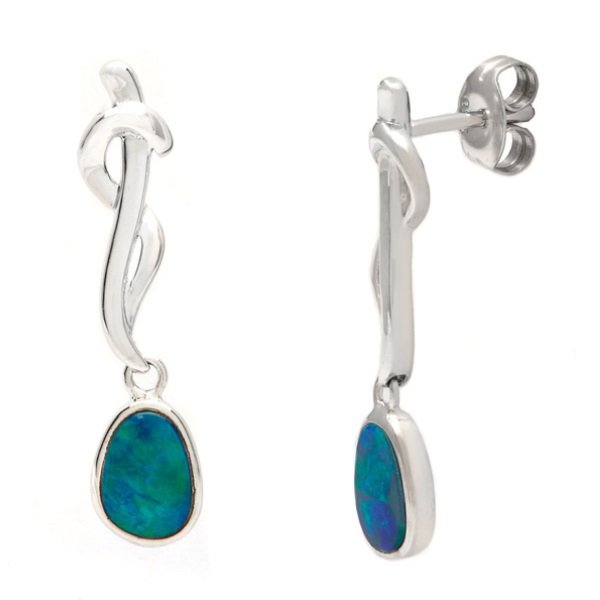
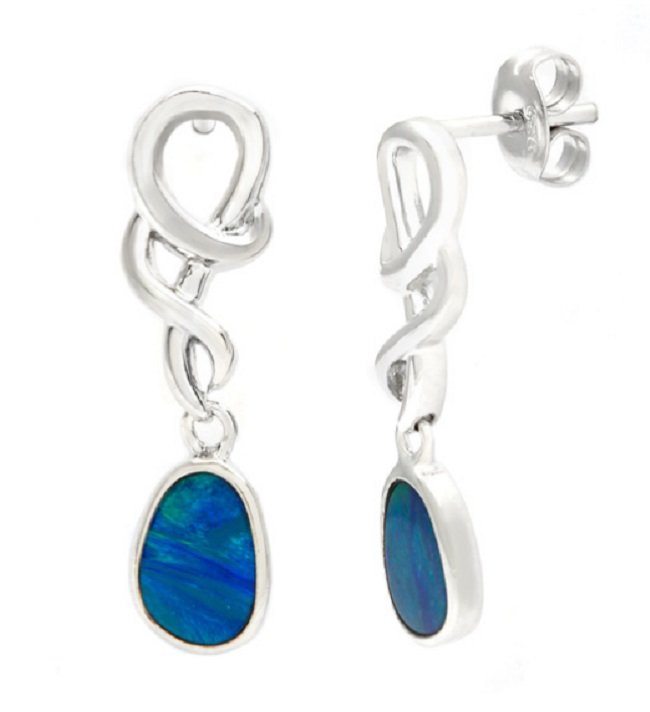
Be clear about what you are buying. A doublet is a thin slice of opal glued to a dark backing, and a triplet adds a clear quartz cap on top. Both are honest products at the right price, and a triplet can make a tougher ring stone. For solid stones in calibrated sizes, browse our cut and polished gemstones.
- Ask whether the stone is solid, a doublet or a triplet
- Look at the side of the stone: a straight glue line points to a doublet or triplet
- Lab-made opal can show a regular “chicken wire” or snakeskin pattern under magnification
- Unusually dark body colour on a cheap stone may mean smoke or sugar treatment
- Turn the stone in different lights; good opal shows colour from many angles
Keeping it beautiful
Opal is softer than most gems and holds water in its structure, so sudden heat or very dry conditions can cause fine cracks, called crazing. Solid opal can be cleaned with warm soapy water, but doublets and triplets should never be soaked, as water can loosen the glue.
Because opal is soft, it is happiest in pendants and earrings, or in rings with a protective bezel. If an older opal has lost its shine or loosened in its setting, our heirloom care service can look at it.
- Wipe clean with a soft damp cloth and mild soap
- Never use ultrasonic or steam cleaners
- Avoid sudden temperature changes and leaving opal in hot sun
- Do not soak doublets or triplets
- Store wrapped in soft cloth, away from harder gems
Opal, from D’sire
Opal needs a careful hand at the bench. Drawing on three decades in Hong Kong, we can source and cut it to your sizes for private label collections, and design bespoke settings that protect a softer stone.




Opal FAQs
What does the opal stone mean?
Opal is the October birthstone. The Romans saw it as a symbol of hope, and its reputation for bad luck only dates from an 1829 novel by Sir Walter Scott.
Is opal unlucky?
No. The idea of unlucky opal comes from fiction, not ancient tradition. Before that, opal was considered one of the luckiest gems because it shows every colour.
What is the most valuable type of opal?
Fine black opal from Lightning Ridge, Australia, usually commands the highest prices, especially with bright red flashes. Value depends on brightness, colour range and pattern.
How can I tell if an opal is real?
Check the side for a glue line, which marks a doublet or triplet. Lab-grown opal often shows a regular chicken wire pattern under magnification, and a gemmologist can confirm.
Can opal get wet?
Solid opal can be washed briefly with mild soapy water. Doublets and triplets should not be soaked, and no opal should go in an ultrasonic cleaner.
Checked against
Every fact on this page was checked against these references. Gem science moves on, so if you spot something out of date, tell us.
- OpalGIA Gem Encyclopedia
- Opal History and LoreGIA
- Opal Value, Price, and Jewelry InformationInternational Gem Society
- OpalGeoscience Australia