
A grey stone that lights up
Labradorite takes its name from the Labrador coast of Canada. Geology.com records that it was found on the Isle of Paul, near the settlement of Nain, by a Moravian missionary in 1770. Held one way, it looks like dark grey rock. Tilt it a few degrees and a sheet of blue, green or gold slides across the surface.
That flash now has its own name: labradorescence. It is one of the few gem effects named after a single stone. Gemmologists group it with other optical phenomena such as the cat's-eye and the star, and GIA's Gems & Gemology guide to phenomenal gems calls it one of labradorite's defining features.
Labradorite is a plagioclase feldspar, a cousin of moonstone and amazonite. Some of the pale, rainbow-flashing feldspar sold as "rainbow moonstone" is in fact a transparent form of labradorite.
What causes labradorite's flash
The colour is not in the stone's body at all. As labradorite cooled very slowly, it separated into extremely thin, alternating layers inside the crystal. Light entering the stone bounces off these internal surfaces and the reflected waves interfere with each other, so only certain colours come back to your eye.
The spacing of the layers decides the colour. Most labradorite flashes blue, which is the commonest phenomenal colour in the stone. Finer pieces add green, gold, orange and, rarely, violet. Because the layers sit at one angle inside the crystal, the flash appears only when you look from the right direction, which is why a cutter has to orient the rough carefully before shaping it.
Spectrolite and the Finnish find
In the 1940s, while defensive works were being built in south-eastern Finland, an unusually bright labradorite turned up around Ylämaa. Its colours covered the full spectrum on a near-black background. The director of the Geological Survey of Finland gave the best material a trade name, spectrolite, and Finnish stone is still the benchmark for intensity.
Today much of the labradorite on the market comes from Madagascar and Russia, with further sources in Canada, Finland, India and the United States. Oregon produces transparent gem labradorite that shows no flash at all and is sold as Oregon sunstone. It is the same mineral wearing a very different face.
The facts
- Mineral family
- Feldspar (plagioclase)
- Chemical formula
- (Ca,Na)(Al,Si)₄O₈
- Mohs hardness
- 6–6.5
- Refractive index
- 1.554–1.573
- Specific gravity
- 2.69–2.72
- Crystal system
- Triclinic
- Colours
- Grey to black body with blue, green, gold, orange or violet flash; also colourless to yellow transparent material
- Main sources
- Madagascar, Finland, Canada (Labrador), Russia, India, USA (Oregon)
- Birthstone
- —
- Common treatments
- Usually untreated; check for coatings or backing on very thin pieces
What makes a good labradorite
Labradorite value comes down to the flash. Look for colour that is bright, covers most of the face and shows more than one hue. Full-spectrum stones with orange, gold and violet beside the usual blue sit at the top of the range. A dark body colour makes the flash look stronger, so near-black stones are often preferred.
Orientation matters as much as quality. A well-cut cabochon flashes when you look straight down at it, the way it will sit in a ring or pendant. Poorly oriented stones only light up at an awkward angle. Most labradorite is cut as cabochons, beads and carvings, while clear material can be faceted.
- Tilt the stone: real labradorescence appears and disappears with angle, not as an even glow
- Check the flash is visible face-up, not only from the side
- Expect natural lines, needles and darker patches; perfectly uniform colour is a warning sign
- Iridescent glass and coated stones show surface colour that looks the same from every angle
- Ask whether thin slices or doublets have a backing glued on
- "Spectrolite" should mean exceptional full-spectrum colour, ideally with origin stated
Keeping it beautiful
At 6 to 6.5 on the Mohs scale, labradorite is softer than quartz and has two directions of perfect cleavage, so a sharp knock can split it. It suits earrings, pendants and necklaces well. For rings, choose a protective bezel setting and expect to take it off for heavy work.
- Clean with warm soapy water and a soft brush
- Avoid ultrasonic and steam cleaners
- Store away from harder gems such as sapphire and diamond
- Remove before sport, gardening or the gym
- Keep away from household chemicals and strong acids
Labradorite, from D’sire
At D’sire we have spent three decades in Hong Kong cutting and calibrating stones for the trade, and labradorite rewards that care because its flash depends on orientation. We can source and cut it to your sizes as cabochons, beads or strands, and set it into private label or bespoke pieces.
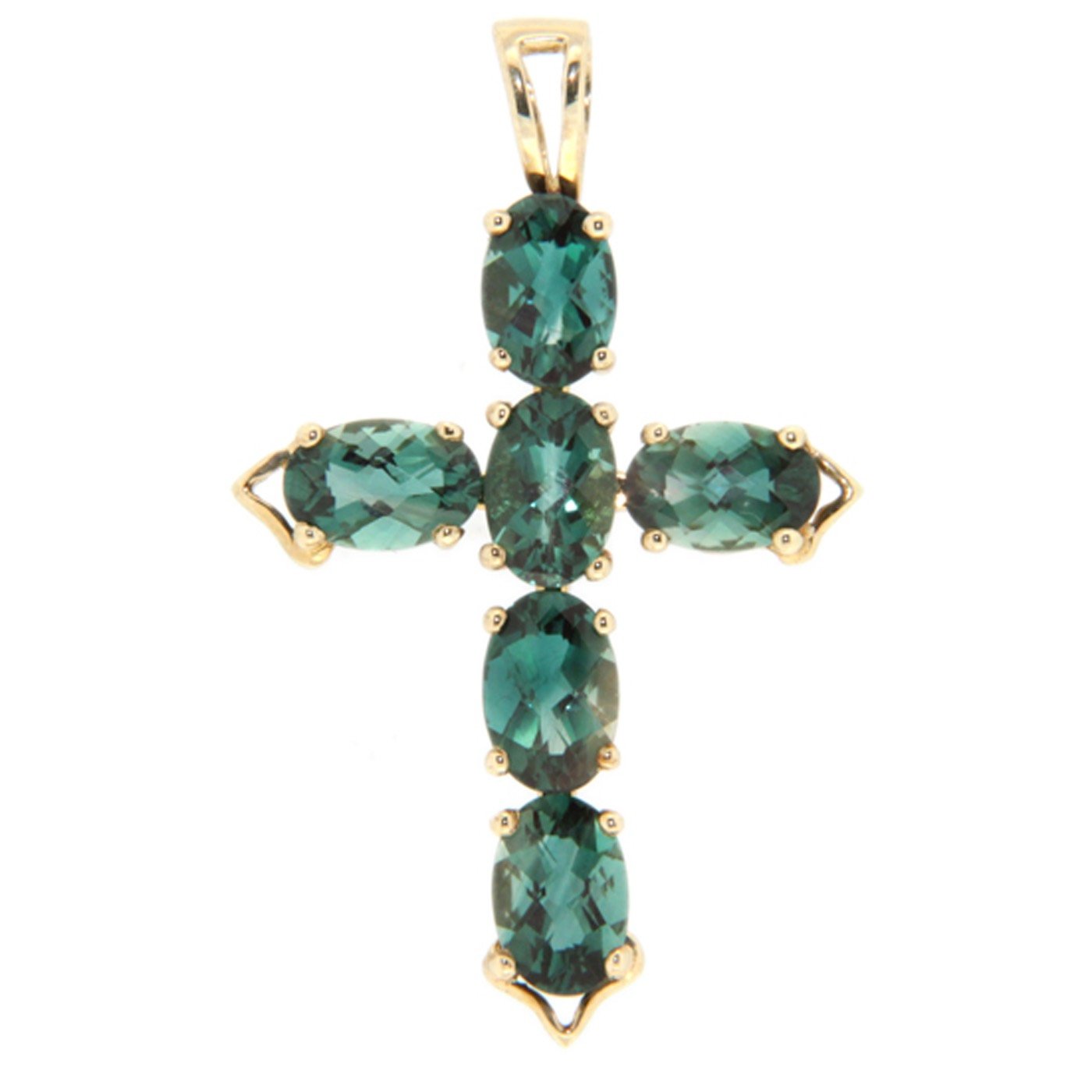
Green Andesine Labradorite 10k Gold Pendant

Red Labradorite and Diamond 10k Gold Pendant

Red Labradorite and Diamond 10k Gold Pendant
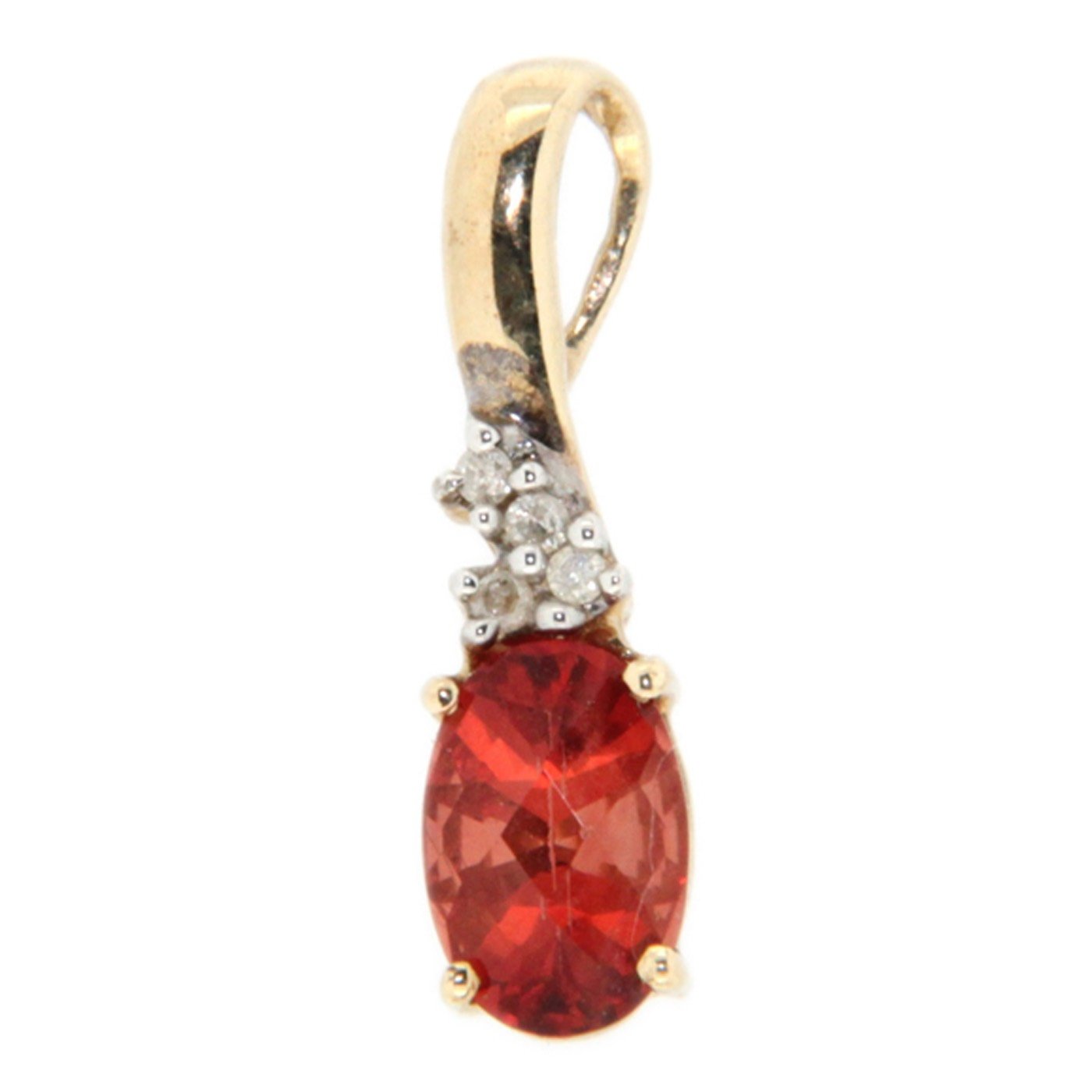
Red Labradorite and Diamond 10k Gold Pendant

Red Labradorite and Diamond 10k Gold Pendant

Labradorite FAQs
What is labradorite stone?
Labradorite is a plagioclase feldspar known for labradorescence, a flash of blue, green or gold that moves across the stone as you tilt it. It is named after Labrador in Canada, where it was first described.
What is the difference between labradorite and spectrolite?
Spectrolite is a trade name for exceptionally bright labradorite, first used for Finnish material that shows the full spectrum of colours on a dark background. It is the same mineral, valued for stronger, wider-ranging flash.
How can I tell if labradorite is real?
Real labradorite flashes only at certain angles and usually shows natural lines and darker patches. Glass or coated imitations tend to show the same even sheen from every direction.
Is labradorite good for everyday rings?
It can be worn in rings with care. At 6 to 6.5 in hardness with perfect cleavage, it is best in a protective setting and taken off for rough tasks.
What affects labradorite value?
Brightness, the number of colours and how much of the face flashes matter most, followed by body colour, orientation and cutting. Full-spectrum stones are the most sought after.
Checked against
Every fact on this page was checked against these references. Gem science moves on, so if you spot something out of date, tell us.
- Labradorite Value, Price, and Jewelry InformationInternational Gem Society
- G&G in a Flash: Guide to Phenomenal GemsGIA Gems & Gemology
- Labradorite gemstone informationGemdat.org
- Labradorite: the gem plagioclase feldspar with play-of-colorGeology.com