Ice that never melts
Colourless quartz is called rock crystal, and for most of history it was the closest thing people had to perfect clarity. It was carved into bowls, cups, seals and, most famously, crystal balls. People believed they could see the future in them; the distorted reflection of the viewer’s own face probably explains the visions.
Large flawless pieces are rare, which is why most modern “crystal” balls are glass. The real ones are museum treasures. The Penn Museum in Philadelphia displays a sphere of natural rock crystal about 25 cm across, believed to be the fourth largest in the world. The crystal probably came from Burma, and it was likely cut and polished in Shanghai before arriving in America in the 1920s.
The word quartz itself comes from the German Quarz, which traces back to a Slavic word meaning hard.
The quartz in your watch
Quartz has a strange talent. Squeeze it and it produces a tiny electric charge; pass a current through it and it flexes very slightly. This is called piezoelectricity. In a quartz watch, a sliver of crystal vibrates thousands of times a second, and a circuit counts those beats down to one per second. When quartz watches spread in the 1970s, they changed the watch industry.
Demand for flawless quartz in radios during the Second World War pushed scientists to grow it in the laboratory. GIA notes that hydrothermal synthetic quartz was first made in the 1890s but only became widely available during the war. Today most quartz in electronics is grown, not mined, and synthetic amethyst and citrine reached jewellery as a by-product.
One mineral, many quartz gemstones
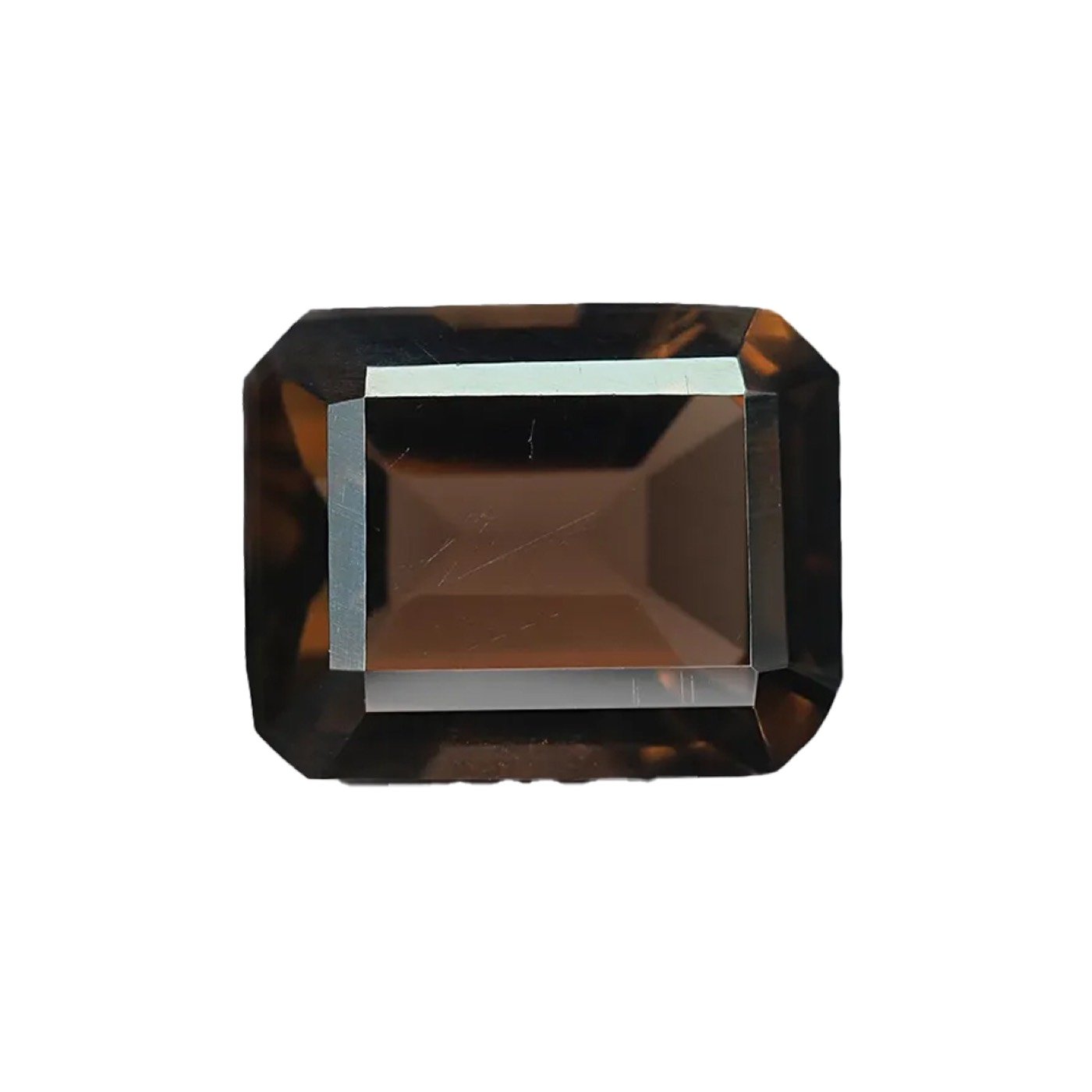
Quartz is the gem world’s great shape-shifter. Traces of iron, natural radiation and inclusions turn plain silica into more than a dozen colours and varieties, many sold under their own names. Amethyst is purple, citrine yellow to orange, and ametrine both at once. Rose quartz is pale pink, smoky quartz brown, and rutilated quartz carries golden needles of rutile.
Then there are the fine-grained forms, built from microscopic crystals: agate, onyx, carnelian, jasper and chalcedony. Even tiger’s eye is quartz. With a hardness of 7 and no cleavage, almost all of them are tough enough for daily wear.
Quartz forms almost everywhere: in igneous, metamorphic and sedimentary rocks, at almost any temperature. Clear rock crystal comes from Brazil, Madagascar, Russia and the USA. Designers have long used it as a crisp, icy foil to colour; Art Deco jewellers paired it with black onyx for sharp geometric contrast.
The facts
- Mineral family
- Quartz (silicate)
- Chemical formula
- SiO₂
- Mohs hardness
- 7
- Refractive index
- 1.544–1.553
- Specific gravity
- 2.65
- Crystal system
- Trigonal
- Colours
- Colourless, purple, yellow, orange, pink, brown, grey, black, green
- Main sources
- Brazil, Madagascar, USA, Russia, Uruguay, Bolivia, Zambia
- Birthstone
- February (amethyst), November (citrine); rock crystal is a traditional April stone
- Common treatments
- Heating, irradiation, dyeing, coating, quench crackling
What makes a good quartz
For rock crystal, clarity is everything: the best is water-clear, with no cloudiness or cracks, and cut to show it off. For coloured quartz, look for even, lively colour. For included varieties such as rutilated quartz, the beauty is in the inclusions, so choose a pattern you love.
Quartz is plentiful, so value rests on size, cutting quality and colour rather than rarity. Precise calibration matters for sets and lines. See our cut and polished gemstones.
- Rock crystal should be clear, bright and free of haze
- Coloured quartz should show even colour without patchy zoning
- Glass feels warmer to the touch and may show bubbles or swirls
- Very clean quartz may be synthetic; ask the supplier
- Bright greens and blues are often dyed or coated
- “Crackle” quartz has been heated and quenched, which weakens it
Keeping it beautiful
Quartz is one of the easiest gems to live with. It is hard, has no cleavage and resists most knocks. Some coloured varieties, such as amethyst and rose quartz, can fade with long exposure to strong sunlight, and coated or dyed pieces need gentler handling.
- Clean with warm, soapy water and a soft brush
- Ultrasonic cleaning is usually safe for untreated, uncracked stones
- Keep coloured quartz out of long, direct sunlight
- Avoid sudden temperature changes
- Store apart from harder gems such as sapphire and diamond
Quartz, from D’sire
Quartz in all its colours has been part of our Hong Kong bench for three decades. We supply cut and calibrated stones and strands for the trade, and we can source and cut it to your sizes for private label lines.
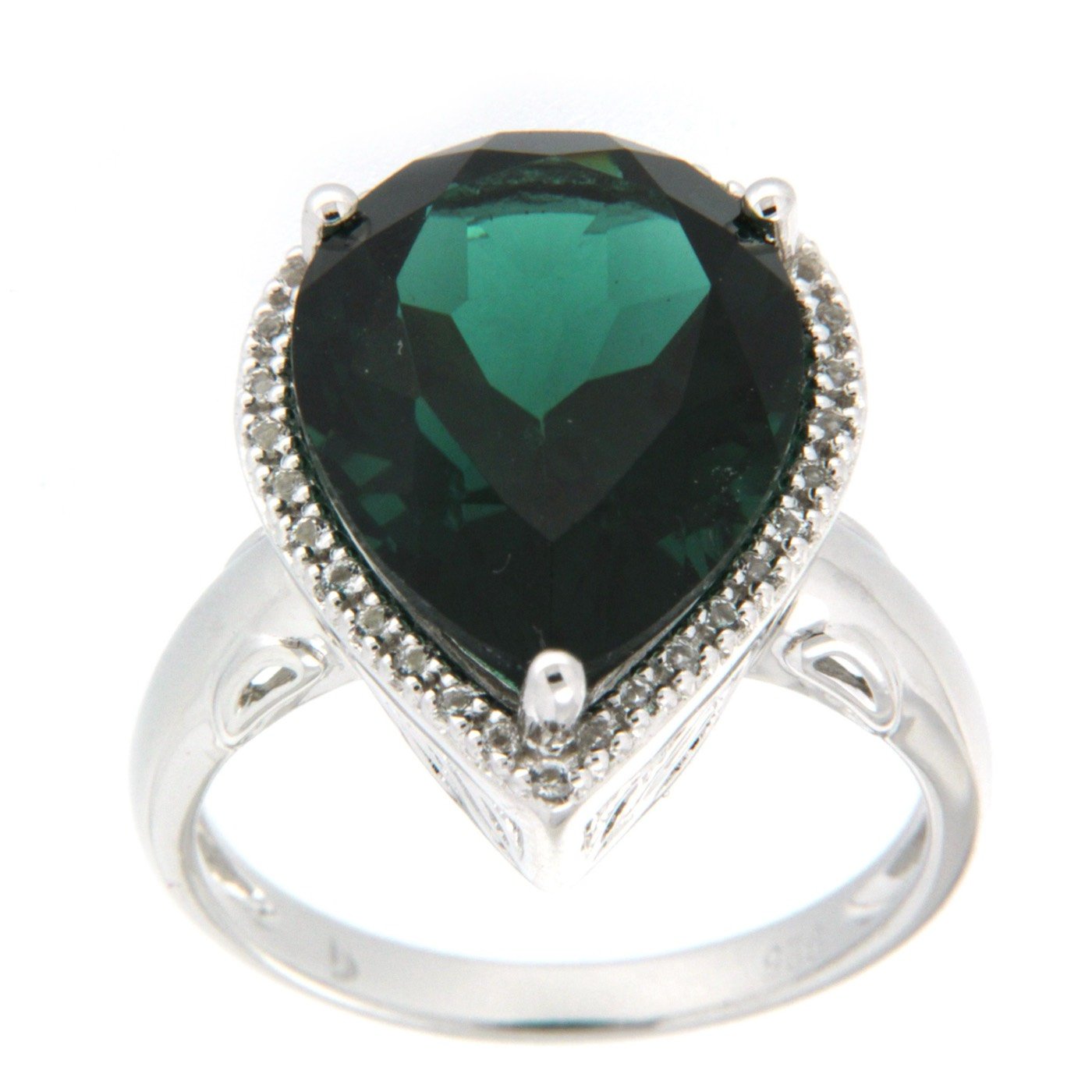
Sterling Silver Green Hydrothermal Quartz Ring

Ladies Natural Topaz & Quartz Ring
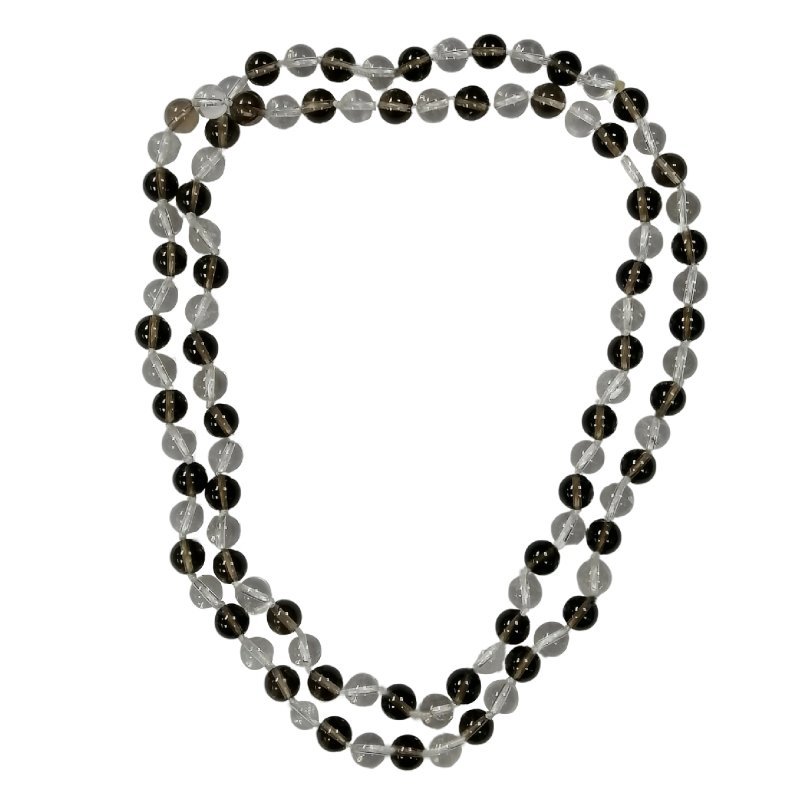

Onyx & Rose Quartz Necklace
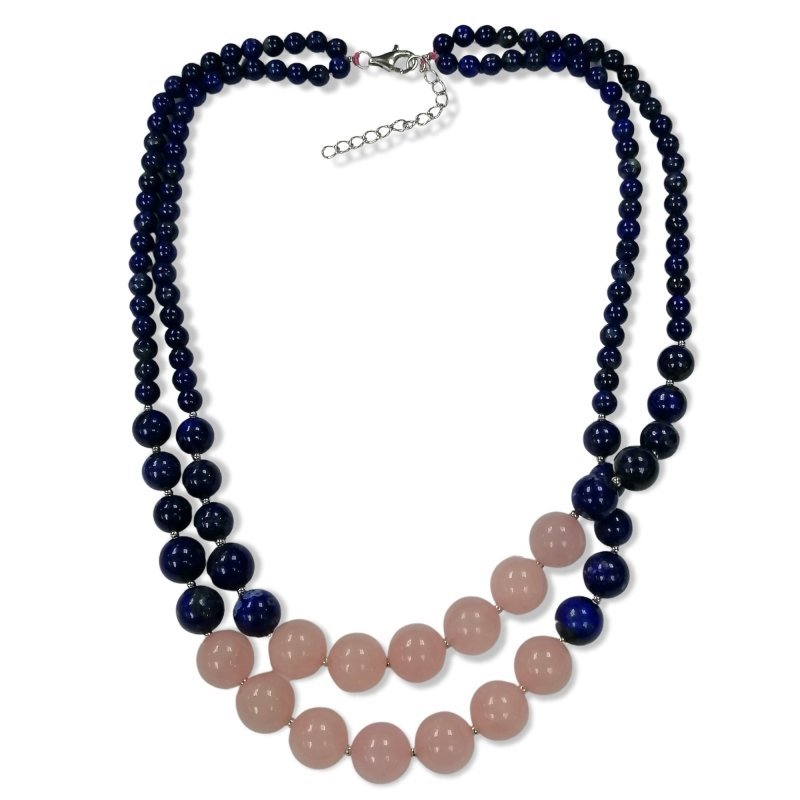

Natural Rose Quartz Rondelle Chips Bracelet 7.5″+3″ Ladies 925 Sterling Silver Emotional H
Quartz FAQs
Is quartz a real gemstone?
Yes. Quartz is one of the most important gem minerals, and many popular gems, including amethyst, citrine and agate, are varieties of quartz.
How can I tell quartz from glass?
Quartz feels cooler to the touch, is harder and is doubly refractive. Glass often shows round bubbles or swirl marks under a loupe. A gemmologist can confirm it in minutes.
Is quartz valuable?
Most quartz is affordable. Value rises with size, clarity, colour and cutting, and with fine examples of varieties such as amethyst, ametrine or rutilated quartz.
What is the quartz birthstone?
Amethyst is the birthstone for February and citrine for November. Rock crystal is sometimes listed as a traditional alternative for April.
Is lab-grown quartz real quartz?
Yes. Synthetic quartz has the same chemistry and structure as natural quartz. It is grown in the laboratory, mainly for electronics, and should always be disclosed.
Checked against
Every fact on this page was checked against these references. Gem science moves on, so if you spot something out of date, tell us.
- Quartz Value, Price, and Jewelry InformationInternational Gem Society
- QuartzInternational Colored Gemstone Association
- Clear Quartz (Rock Crystal)International Colored Gemstone Association
- An Introduction to Synthetic Gem MaterialsGIA
- Crystal BallPenn Museum