The oldest crystal on Earth
In 2001, geologists published ages for zircon grains from the Jack Hills in Western Australia that had formed about 4.4 billion years ago. That is only around 160 million years after the solar system itself formed.
Some scientists doubted the date, so a team led by John Valley at the University of Wisconsin–Madison checked it again, atom by atom, and confirmed the age in Nature Geoscience in 2014. Zircon survives that long because it is tough and chemically stable, and the traces of uranium it holds let scientists date it.
The crystals in those studies are microscopic. Gem zircon is the same mineral, grown large and clear enough to cut.
Zircon is not cubic zirconia
Zircon is a natural zirconium silicate. Cubic zirconia is a synthetic zirconium oxide, made in factories as a diamond simulant. The names sound alike, which is why GIA describes zircon as unfairly confused with it.
There is an older reason for the mix-up. Colourless zircon has brilliance and fire close to diamond, and in the early 1900s it was widely used as a diamond simulant. Colourless stones from Sri Lanka were known as "Matara" zircon, after the city near where they were mined.
Zircon has its own folklore too. GIA notes that in the Middle Ages people believed it brought sound sleep and drove away evil spirits. The Victorians loved blue zircon, which appears in English estate jewellery from the 1880s. George Kunz of Tiffany & Co. even proposed the name "starlite" for it, which never caught on. Zircon now shares the December birthstone with tanzanite and turquoise.
Fire, doubling and colour
Zircon has a high refractive index and a dispersion of 0.039, close to diamond's, which gives it flashes of rainbow fire. It is also strongly doubly refractive. Look into a stone at an angle and the back facets can appear doubled, a useful clue for gemmologists.
Colours run from colourless and blue to green, yellow, orange, red and brown. Almost all blue and colourless zircon starts as brownish rough heated to between 800 and 1,000°C, and Cambodia is the main source of material for that treatment. Sri Lanka, Myanmar, Australia and Tanzania supply other colours.
Australia is a major producer too. The International Gem Society estimates it supplies about a third of all mined zircon, with gem material coming mainly from alluvial deposits in New South Wales, Queensland and Tasmania, typically in earthy browns, reds and yellows.
The facts
- Mineral family
- Zircon
- Chemical formula
- ZrSiO₄
- Mohs hardness
- 6–7.5
- Refractive index
- 1.78–2.02 (varies with type)
- Specific gravity
- 3.9–4.8
- Crystal system
- Tetragonal
- Colours
- Colourless, blue, green, yellow, orange, red, brown
- Main sources
- Cambodia, Sri Lanka, Myanmar, Australia, Tanzania
- Birthstone
- December (with tanzanite and turquoise)
- Common treatments
- Heating (almost all blue and colourless stones)
What makes a good zircon
Blue is the most popular colour and usually the most expensive, and the finest stones show a vivid, saturated blue. Green is the rarest natural colour seen in jewellery. Clean stones with sharp, well oriented cutting are worth the most.
Good cutters orient the table to the crystal's optic axis, so the stone looks crisp rather than fuzzy from doubling. Ask whether a stone is "high" zircon. "Low" zircon, whose structure has been broken down over geological time by natural radioactivity, is usually cloudy, softer and less brilliant.
- Confirm you are buying natural zircon, not cubic zirconia
- Look through the table: facets should look crisp, not fuzzy or doubled
- Check facet edges for chips and wear, especially on older pieces
- Expect blue and colourless stones to be heated
- Ask how the colour behaves in sunlight; some heated colours can shift
- A gemmologist can identify zircon by its strong doubling and high density
Keeping it beautiful
Zircon ranges from about 6 to 7.5 on the Mohs scale, but it is brittle. Facet edges chip and wear with everyday knocks, so earrings and pendants are safer homes than rings worn daily, and rings need protective settings.
Some heated colours may change under ultraviolet light or strong sunlight. Store zircon out of direct sun and clean it gently by hand.
- Clean with warm soapy water and a soft brush
- Avoid ultrasonic and steam cleaners
- Store separately so facet edges do not rub against other gems
- Keep out of strong sunlight when not being worn
- Choose protective settings for rings
Zircon, from D’sire
Zircon rewards careful cutting, because orientation decides whether a stone looks crisp or blurred. From our Hong Kong bench we supply cut and calibrated stones to the trade, and with three decades of sourcing behind us we can source and cut it to your sizes for private label collections, bespoke pieces or heirloom remakes.
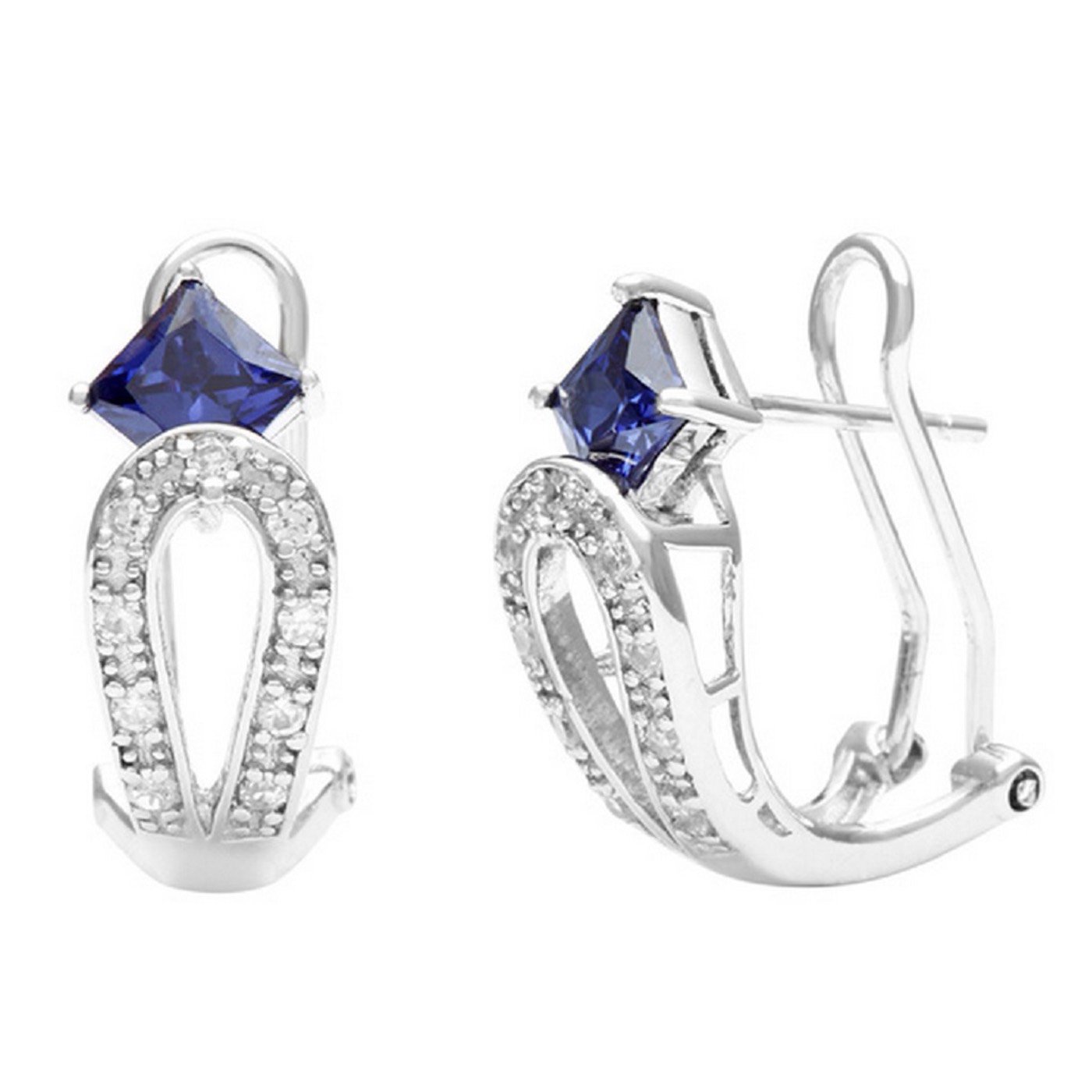
Sterling Silver Blue and White Zircon Earrings
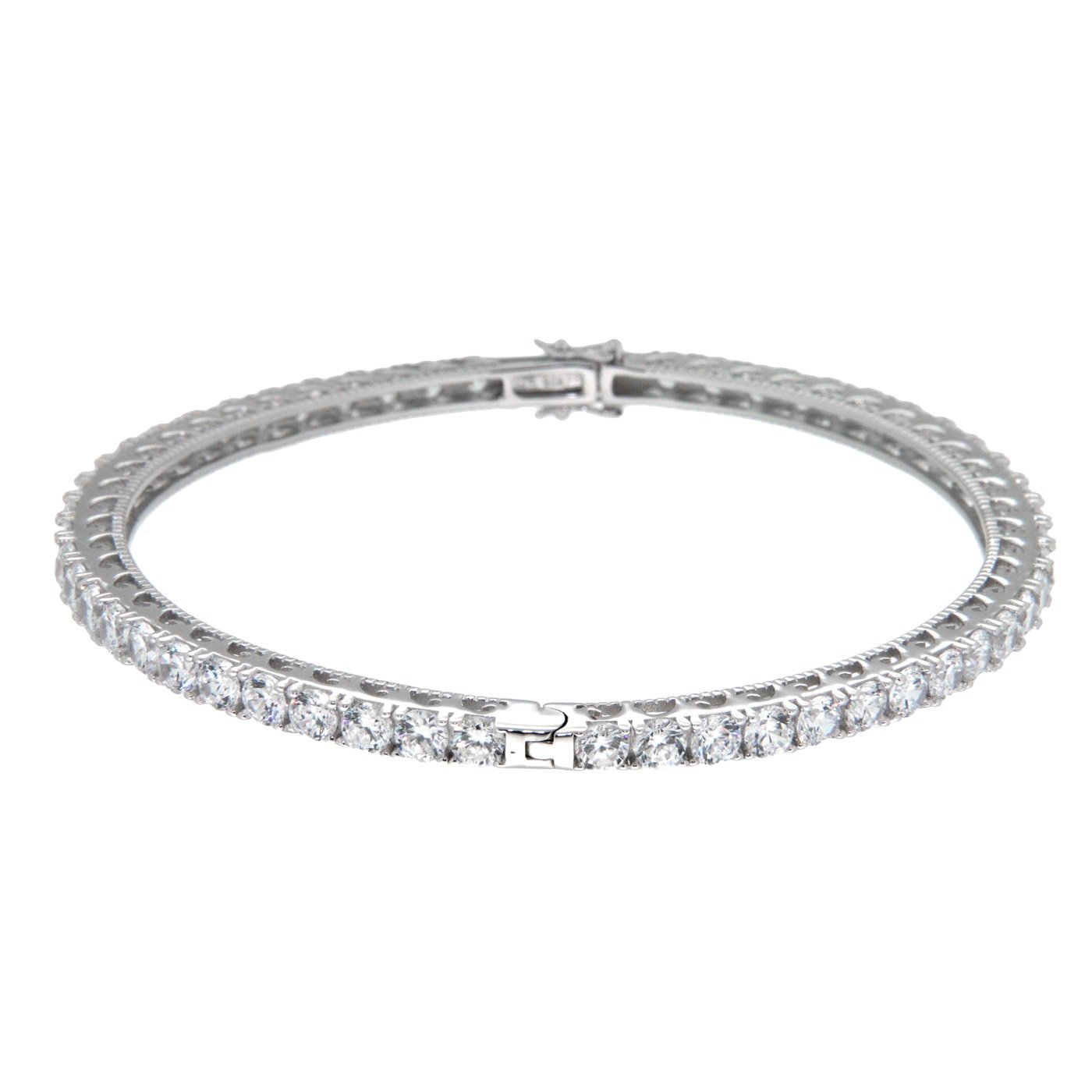
Sterling Silver White Zircon Hinged Bangle

Sterling Silver White Zircon Earrings

Sterling Silver Blue and White Zircon Earrings

Sterling Silver Blue and White Zircon Earrings

Sterling Silver Blue and White Zircon Earrings
Zircon FAQs
Is zircon the same as cubic zirconia?
No. Zircon is a natural mineral, zirconium silicate. Cubic zirconia is a synthetic zirconium oxide made as a diamond simulant.
Is zircon the oldest mineral on Earth?
Zircon grains from the Jack Hills in Western Australia are about 4.4 billion years old, the oldest known fragments of Earth's crust.
What is the zircon birthstone month?
December, alongside tanzanite and turquoise. Blue zircon is the colour most people associate with it.
Is blue zircon natural?
Almost all blue zircon is heated from brownish rough. The treatment is standard in the trade and undetectable.
Is zircon durable enough for everyday wear?
It is fairly hard but brittle, so facet edges can chip. It suits earrings and pendants well; rings need a protective setting and gentle wear.
Checked against
Every fact on this page was checked against these references. Gem science moves on, so if you spot something out of date, tell us.
- ZirconGIA Gem Encyclopedia
- Zircon history and loreGIA
- Zircon value, price and jewelry informationInternational Gem Society
- How old is my zircon?International Gem Society
- Zircon sourcesInternational Gem Society
- Zircon gemstone informationGemdat.org
- Oldest bit of crust firms up idea of a cool early EarthUniversity of Wisconsin–Madison