
Topaz meaning and a case of mistaken identity
Most authorities trace the word topaz to Topazios, the ancient Greek name for an island in the Red Sea now called Zabargad. GIA points out that the island never yielded topaz at all. It was a source of peridot, which early writers confused with topaz. Some scholars prefer a Sanskrit root meaning fire.
The confusion did not end there. For centuries almost any yellow stone could be called topaz, and yellow citrine is still mislabelled as topaz today. They are different minerals: topaz is harder and more brilliant than quartz.
The old beliefs are colourful. GIA notes that the ancient Greeks thought topaz gave them strength, and that Renaissance Europeans believed it could break magic spells and calm anger.
Imperial topaz, from the Urals to Ouro Preto
The name imperial topaz began in nineteenth-century Russia, when the Ural Mountains were the leading source. According to GIA, pink topaz mined there was named in honour of the tsar, and ownership was restricted to the royal family.
Brazil has the longer story. GIA notes that Portugal's royal court celebrated the discovery of imperial topaz in 1768, when Brazil was a Portuguese colony. A 1983 Gems & Gemology study by Peter Keller described a small mining district near Ouro Preto, in Minas Gerais, as the only known source of imperial topaz for more than 200 years.
Today the term covers rich orange, pink, red and peach shades. The reddish stones are the most prized of all.
How blue topaz became an everyday gem
Natural blue topaz exists but is usually pale. The bright blues in today's jewellery are made: colourless topaz is irradiated, which turns it brown, and then heated to a stable blue. The International Gem Society dates the spread of this method to the 1960s, and it turned blue topaz into one of the most affordable coloured gems.
Topaz also grows very large. GIA mentions a transparent crystal from Minas Gerais that weighs about 271 kilograms. That generosity of size is why topaz is easy to find in cut and polished stones of almost any dimension.
The facts
- Mineral family
- Topaz
- Chemical formula
- Al₂SiO₄(F,OH)₂
- Mohs hardness
- 8
- Refractive index
- 1.606–1.649 (varies with type)
- Specific gravity
- 3.49–3.57
- Crystal system
- Orthorhombic
- Colours
- Colourless, blue, yellow, orange, brown, pink, red, rarely green
- Main sources
- Brazil, Russia, Pakistan, Sri Lanka, Nigeria, Mexico, Madagascar, Myanmar, USA
- Birthstone
- November (with citrine); blue topaz is also listed for December
- Common treatments
- Irradiation and heating (blue); heating (pink); surface coatings ("mystic topaz")
What makes a good topaz
Colour sets value more than anything. Imperial shades of orange, pink and red sit at the top, with natural pink and red the rarest. Blue topaz, however vivid, is treated and priced accordingly. Most topaz is eye clean, so inclusions should be minimal.
Cut is the other big factor. Well cut topaz is bright, and a good cutter works around its perfect cleavage. Many pink stones are heated yellow, orange or brown topaz; that treatment is stable and usually undetectable.
- Ask whether the colour is natural, heated, irradiated or coated
- Treat "mystic topaz" as a coated stone; the surface film can scratch
- Look for an eye-clean stone with crisp, even facets
- Check that a yellow "topaz" is not citrine under another name
- Glass and other gems can imitate topaz; a gemmologist can test RI and SG
- Ask for a protective setting for rings
Keeping it beautiful
At 8 on the Mohs scale topaz resists scratches well, but it has perfect cleavage in one direction. A sharp knock can split it, so protective settings are wise for rings and bracelets.
Avoid ultrasonic and steam cleaners, as vibration and heat can make it cleave. Warm water, mild detergent and a soft brush are safe. Some treated colours, and some imperial stones, can fade after long exposure to strong sunlight.
- Clean with warm soapy water and a soft brush
- Never use ultrasonic or steam cleaners
- Avoid hard knocks and sudden temperature changes
- Keep coated stones away from abrasives and harsh chemicals
- Store away from harder gems and other jewellery
Topaz, from D’sire
Topaz suits almost every kind of work at our Hong Kong bench, from calibrated blue stones for a collection to warmer tones for a single bespoke piece. We supply cut and calibrated stones and strands to the trade, and we can source and cut it to your sizes for private label lines or heirloom remakes.

Sterling Silver Mango Magic Topaz Earrings

Sterling Silver Neptune Topaz Earrings

Sterling Silver Mango Magic Topaz Pendant

Sterling Silver Swiss Blue Topaz Earrrings
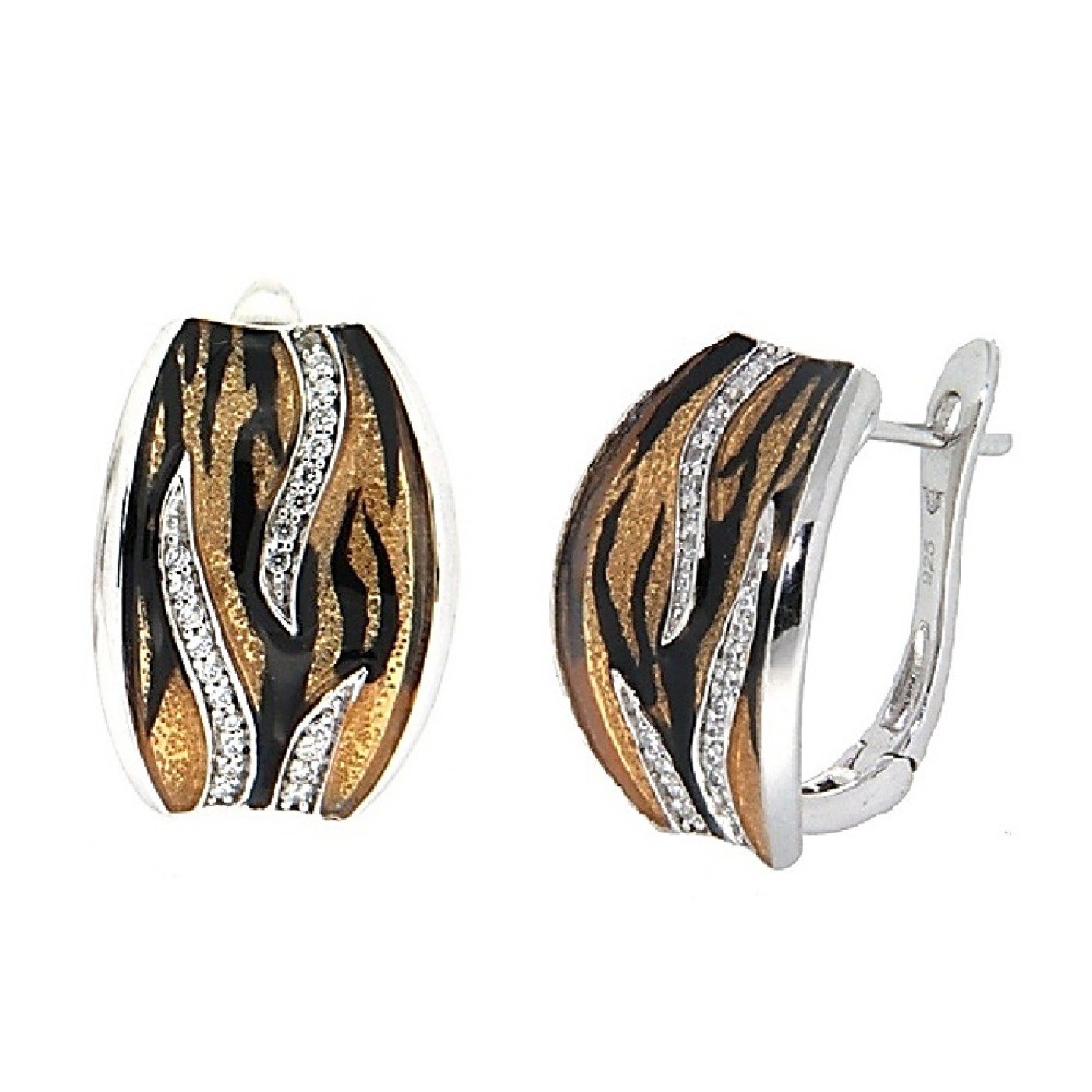
Sterling Silver Animal Print & White Topaz Earrings

Sterling Silver Mystic Green Topaz Earrings
Topaz FAQs
What is imperial topaz?
A trade name for topaz in rich orange, pink, red and peach shades. The name began in nineteenth-century Russia, and the Ouro Preto district of Brazil is the classic source.
Is blue topaz natural?
Natural blue topaz is usually pale. Almost all bright blue topaz is colourless topaz that has been irradiated and heated, and the colour is stable.
What is the topaz birthstone month?
Topaz is a November birthstone, alongside citrine. Blue topaz is also listed for December on some birthstone lists.
What is the difference between topaz and citrine?
They are different minerals. Topaz is harder, at 8 against 7 on the Mohs scale, and denser, while citrine is a variety of quartz.
What is topaz worth?
Most topaz is affordable, and blue topaz is among the least expensive coloured gems. Fine imperial colours, especially natural pink and red, cost far more.
Checked against
Every fact on this page was checked against these references. Gem science moves on, so if you spot something out of date, tell us.
- TopazGIA Gem Encyclopedia
- Topaz history and loreGIA
- Topaz gem, price and jewelry informationInternational Gem Society
- Topaz gemstone informationGemdat.org
- The Capão topaz deposit, Ouro Preto, Minas Gerais, Brazil (Keller, 1983)GIA Gems & Gemology