A blue stone in the Merelani hills
In 1967 a Maasai tribesman found transparent blue-violet crystals (GIA's gem encyclopedia names the finder as Ali Juuyawatu) in the hills of Merelani and showed them to Manuel d'Souza, a local prospector. D'Souza hoped he had found a new sapphire deposit and quickly registered four mining claims. GIA records that around 90 more claims soon appeared in the same small area.
The crystals were not sapphire. They were a blue variety of the mineral zoisite, and more than half a century later Merelani is still the only known source.
That single source is part of the appeal. All of the world's supply depends on one small district, which is why the trade follows news from Merelani closely.
How Tiffany named tanzanite
"Blue zoisite" was hardly a name to sell jewellery. Tiffany & Co. became the main distributor, named the gem after its country of origin and launched a large publicity campaign in 1968. The campaign introduced a stone that had been unknown outside northern Tanzania only a year earlier.
The name stuck. Today tanzanite shares the December birthstone with zircon and turquoise, and it is the gem for a 24th wedding anniversary.
Tanzanite meaning, then, is a modern story rather than an ancient one. There are no medieval legends to repeat. Its appeal is simply the colour, and how rare it is to find that colour at all.
Three colours in one crystal
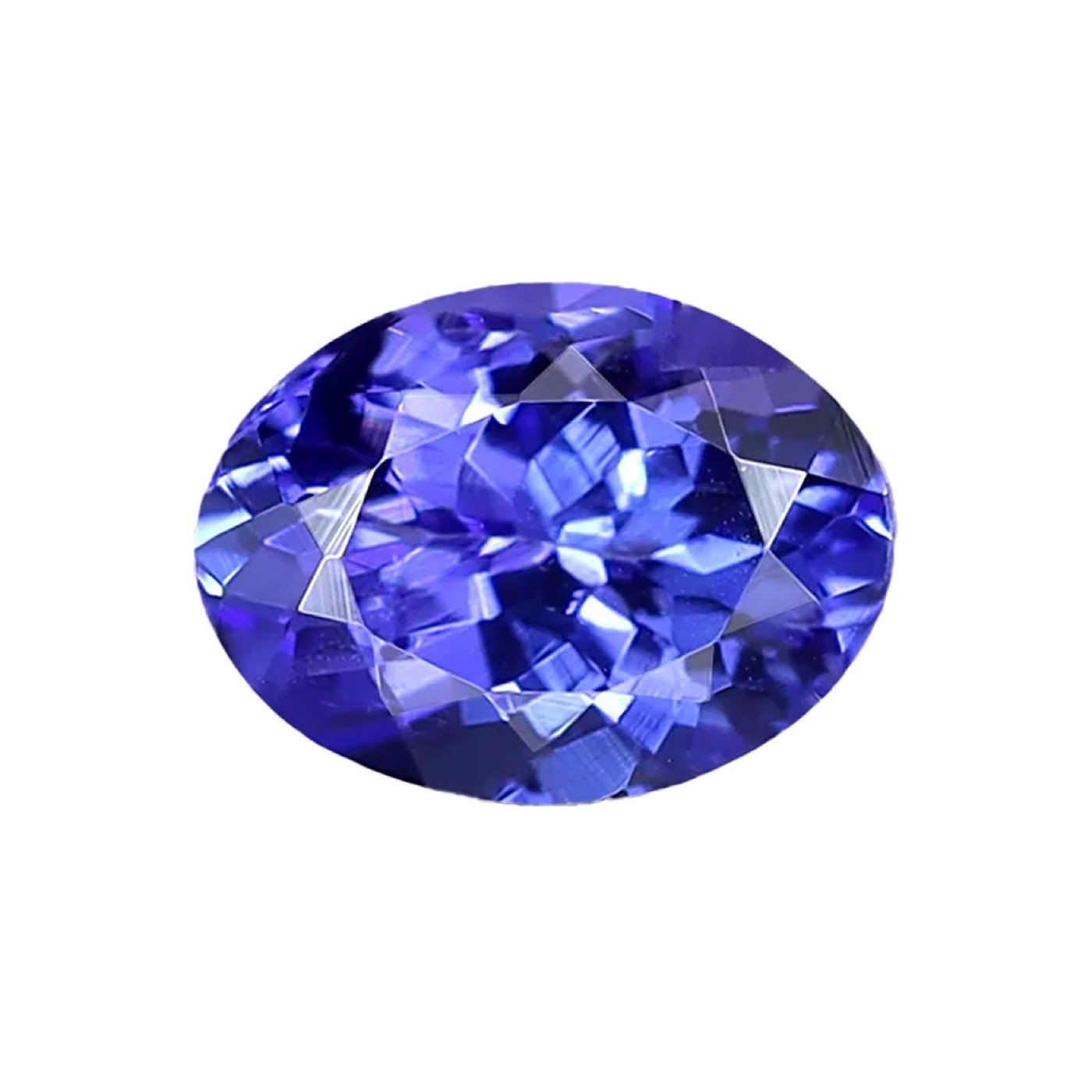
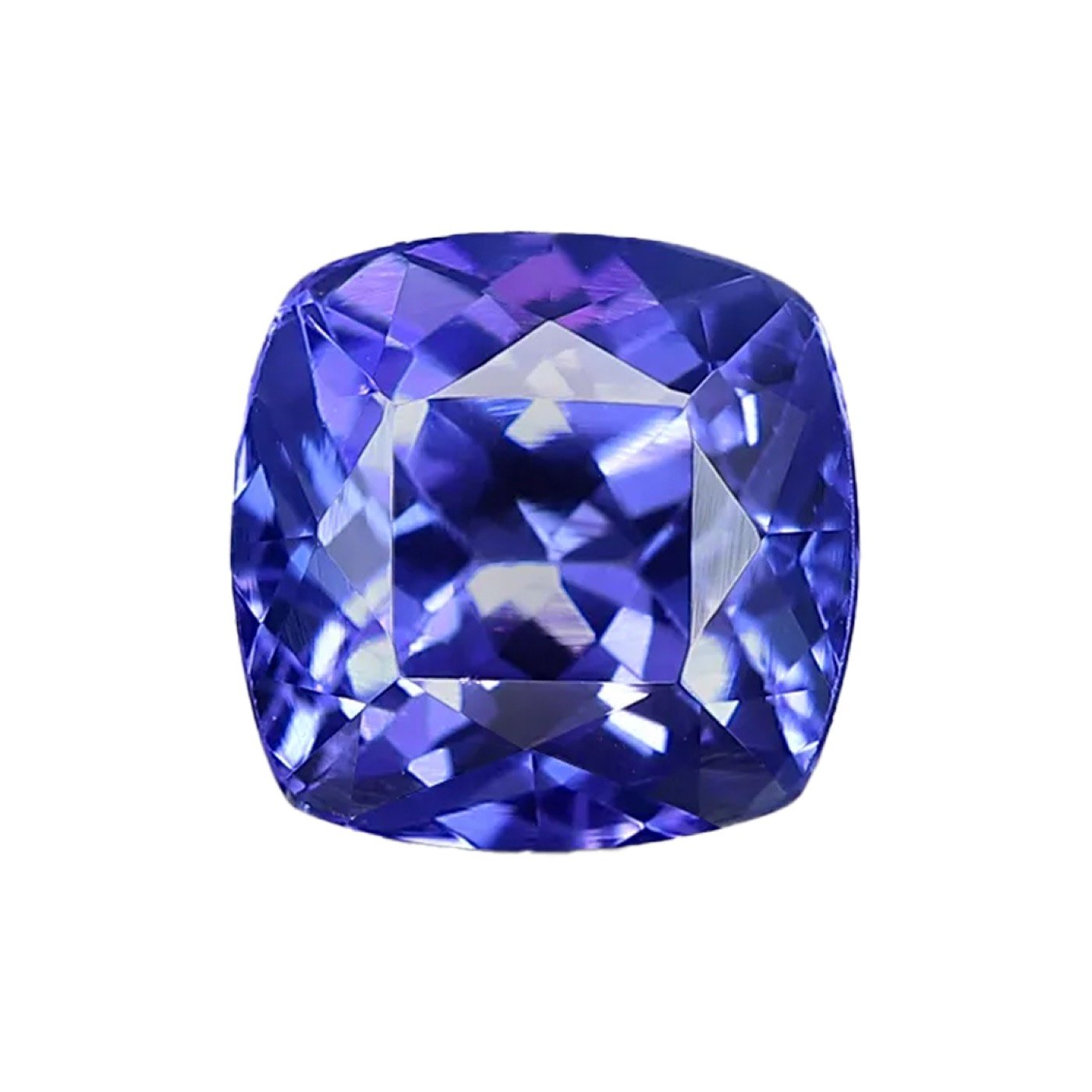
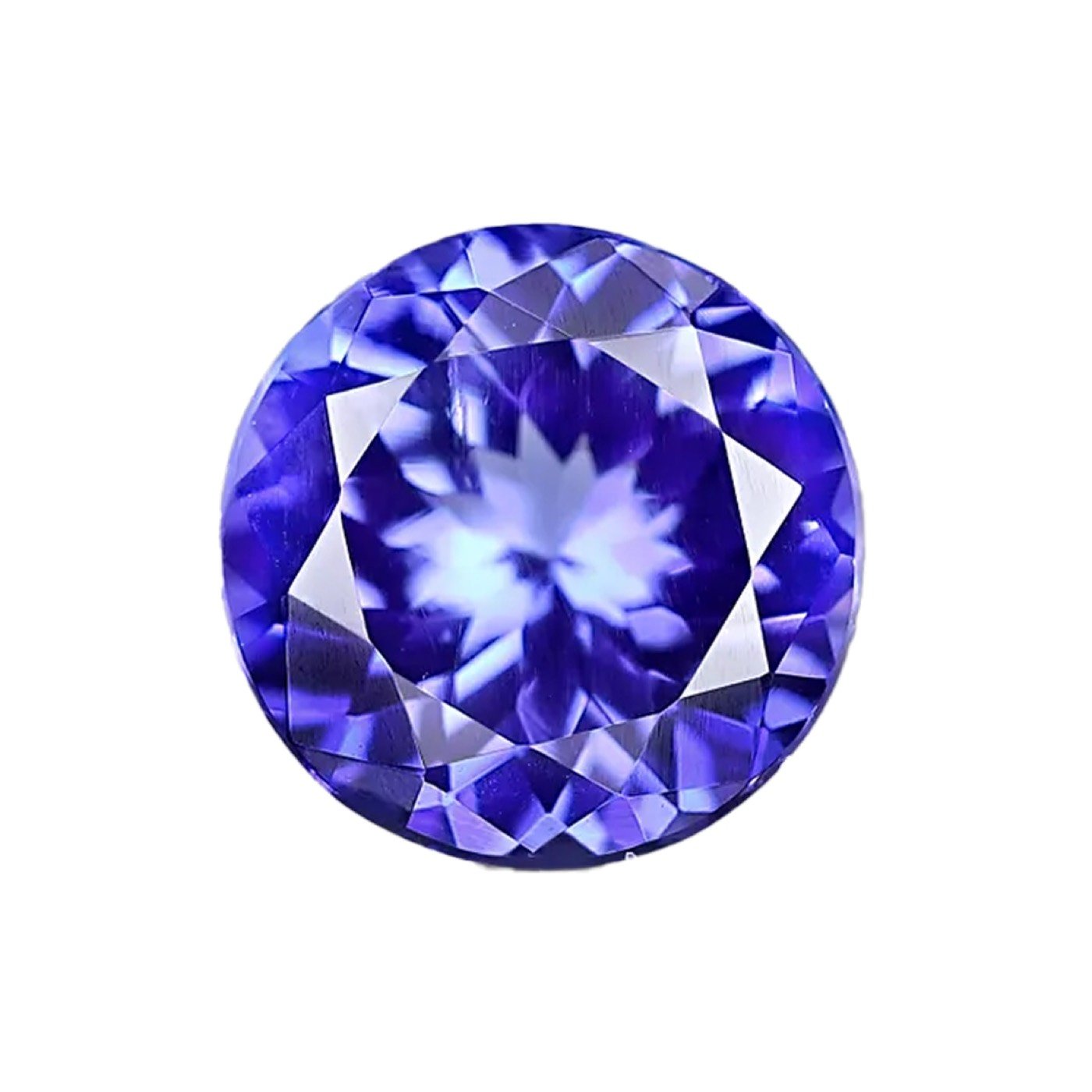
Tanzanite is strongly pleochroic: look through a crystal in different directions and you see three different colours. A skilled cutter orients each stone so the best blue or violet shows face-up.
Most rough comes out of the ground reddish brown. According to the International Gem Society, virtually all tanzanite is heated, typically to about 500–600°C, which removes the brown and reveals the blue-violet. The treatment is stable and accepted across the trade.
Because heating is close to universal, it does not set one stone apart from another. Buyers compare tanzanite with tanzanite, judged on colour, clarity and cut.
The facts
- Mineral family
- Zoisite
- Chemical formula
- Ca₂Al₃(SiO₄)₃(OH)
- Mohs hardness
- 6–7
- Refractive index
- 1.685–1.707
- Specific gravity
- 3.35
- Crystal system
- Orthorhombic
- Colours
- Violetish blue, blue-violet, purple, lavender
- Main sources
- Merelani hills, Tanzania (only known source)
- Birthstone
- December (with zircon and turquoise)
- Common treatments
- Heating (almost universal, stable); occasional surface coatings
What makes a good tanzanite
Colour is everything. The most prized stones show a deep, saturated violetish blue or bluish violet. Lighter lavender stones cost much less. Fine tanzanite is usually eye clean, so visible inclusions reduce its value. A good cut keeps the colour even across the face.
Because heating is standard, a heated stone is not a lesser stone. What matters is depth of colour, the cut, and whether a surface coating has been added to improve colour or lustre. Coatings are less common and should always be disclosed.
Doublets are the trap to watch. Gemdat describes imitations made from two colourless synthetic spinels joined with tanzanite-coloured glue, and others with a glass crown. Looking at the stone from the side, where any join would sit, often gives them away.
- Judge the colour face-up in both daylight and warm light
- Look for an eye-clean stone with a lively, even cut
- Expect heating; ask directly about any surface coating
- Glass, synthetic forsterite and doublets are sold as imitations
- There is no known synthetic tanzanite, so a lab can separate look-alikes
- For rings, ask for a protective setting
Keeping it beautiful
At 6 to 7 on the Mohs scale, with perfect cleavage, tanzanite is softer and more fragile than sapphire. It is happiest in earrings, pendants and occasional-wear rings, ideally in protective settings.
Clean it only with warm water, mild detergent and a soft brush. The International Gem Society lists tanzanite as sensitive to heat, so avoid sudden temperature changes.
Always tell your jeweller a stone is tanzanite before any repair or resizing, so the setting work can be planned around it rather than near a torch.
- Clean only with warm soapy water and a soft brush
- Never use ultrasonic or steam cleaners
- Avoid knocks and sudden temperature changes
- Remove rings for sport, gardening and housework
- Store in a soft pouch away from harder gems
Tanzanite, from D’sire
Tanzanite rewards careful matching, especially for pairs of earrings. From our Hong Kong bench we supply cut and calibrated stones to the trade, and with three decades of sourcing behind us we can source and cut it to your sizes for private label, bespoke work or heirloom remaking.


Tanzanite FAQs
Where does tanzanite come from?
Only one known source: the Merelani hills in northern Tanzania. It was found there in 1967.
Is all tanzanite heat treated?
Virtually all of it. Rough is usually reddish brown, and heating to about 500–600°C reveals the blue-violet colour, which is stable.
Is tanzanite good for an engagement ring?
It can be, with care. At 6 to 7 on the Mohs scale and with perfect cleavage, it needs a protective setting and gentle wear.
What is the tanzanite birthstone month?
December, alongside zircon and turquoise. It is also the gem for a 24th wedding anniversary.
How can you tell real tanzanite from fake?
Common imitations include glass, synthetic forsterite and doublets. Strong pleochroism is a helpful clue, but a gemmologist or lab report is the reliable test.
Checked against
Every fact on this page was checked against these references. Gem science moves on, so if you spot something out of date, tell us.
- TanzaniteGIA Gem Encyclopedia
- Tanzanite history and loreGIA
- Tanzanite (zoisite) value, price and jewelry informationInternational Gem Society
- Tanzanite gemstone informationGemdat.org