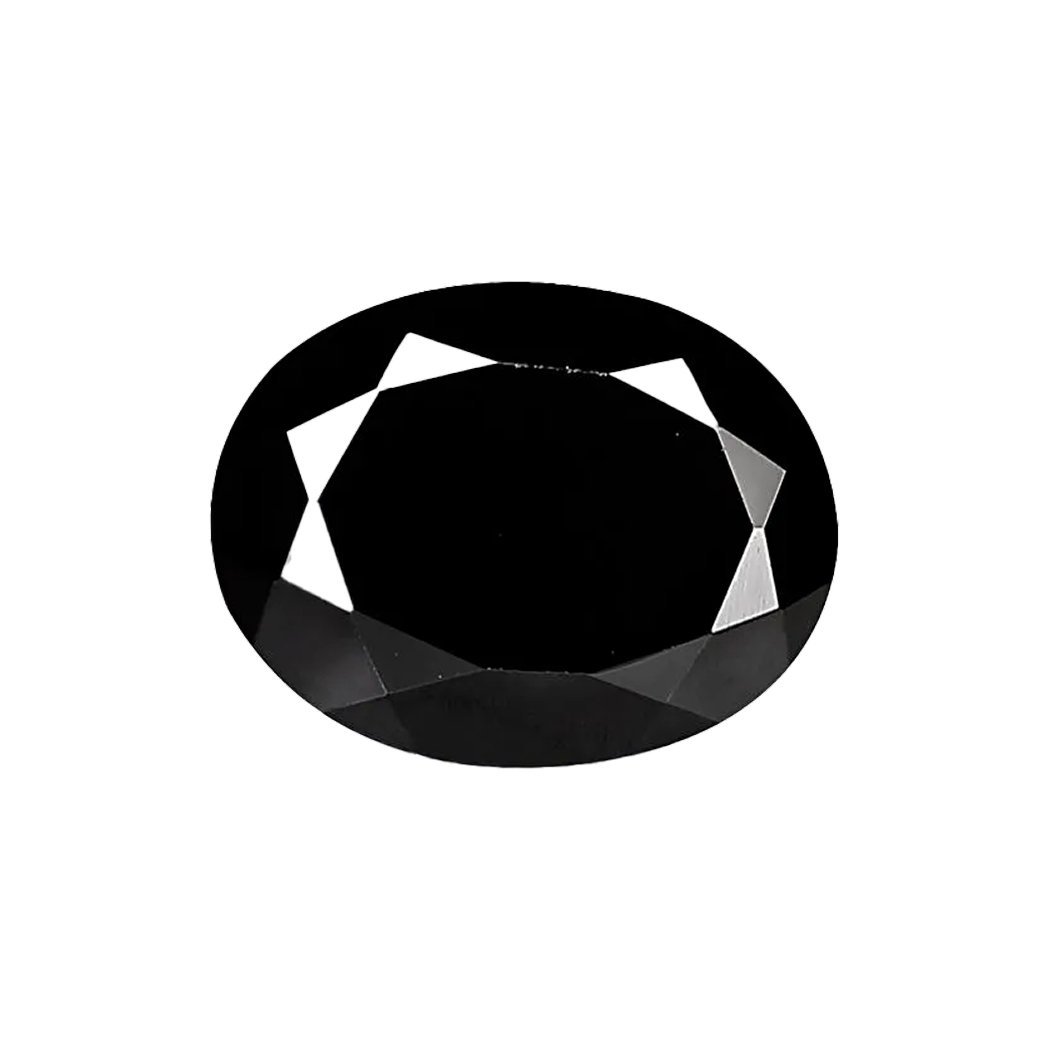
The ruby that wasn’t
The Black Prince’s Ruby first appears in fourteenth-century Spanish records. In 1367 it passed to Edward, Prince of Wales, as payment for helping win a battle in Castile. Henry VIII prized it. It survived fires, an attempted theft and wartime bombing, and today it sits in the Imperial State Crown at the Tower of London.
It has company. The Timur Ruby, another red spinel in the Royal Collection, weighs over 350 carats and carries several Persian inscriptions cut into its surface by earlier owners. For centuries these were the “balas rubies” of Asian and European courts, traded as treasure and taken as spoils of war.
Science caught up in 1783, when the mineralogist Jean Baptiste Louis Romé de l’Isle showed that spinel was a different mineral from ruby. By then, many of history’s most famous rubies had already been named.
Spinel gemstone colours, from red to cobalt blue
Spinel is a magnesium aluminium oxide that grows as neat octahedral crystals. Traces of chromium give the reds and pinks, and iron or cobalt give the blues. A natural cobalt blue spinel is one of the rarest blues in the gem world, and some pinks from Myanmar are so intense the trade calls them “Jedi” spinel.
You will also find lavender, purple, grey, orange and neon pink stones from Sri Lanka, Tanzania, Vietnam and Tajikistan. That range makes spinel a quiet favourite with designers who want something less expected than ruby or sapphire.
Where a spinel was born still shapes how it looks. Ancient mines in central and southeast Asia produced unusually large crystals, and the Black Prince’s Ruby was probably mined in the mountains of Afghanistan. In Myanmar, spinel often turns up in gem gravels as sharp octahedra so perfect that local miners describe them as “polished by the spirits”. Sri Lankan stones, by contrast, are usually worn pebbles in pinks and blues, rolled smooth by rivers.
Why spinel stayed underrated
GIA has called spinel history’s most underappreciated gem, and the reason is a little ironic. Synthetic spinel has been made since the nineteenth century and is cheap, so it has filled birthstone rings and class rings for generations. Many buyers met the synthetic first and never knew a natural spinel existed.
That changed in 2016, when spinel was added as an August birthstone alongside peridot. Fine natural spinel is now firmly on the radar of collectors and jewellery brands.
The facts
- Mineral family
- Spinel group
- Chemical formula
- MgAl₂O₄
- Mohs hardness
- 8
- Refractive index
- 1.71–1.74
- Specific gravity
- 3.54–3.70
- Crystal system
- Cubic (isometric)
- Colours
- Red, pink, orange, purple, lavender, grey, blue, black
- Main sources
- Myanmar, Sri Lanka, Tanzania, Vietnam, Tajikistan, Afghanistan
- Birthstone
- August (with peridot and sardonyx)
- Common treatments
- Usually untreated; heating is occasional
What makes a good spinel
Colour comes first. A pure, saturated red or a vivid hot pink sits at the top of the market, followed by strong cobalt blue. Greyish or brownish tones lower the price, which can make soft lavender and grey stones very good value for a private label range.
Spinel is one of the few gems that is usually sold untreated, and it is often very clean. Large fine stones are scarce, so expect prices to climb steeply above a few carats. For matched pairs and calibrated sizes, browse our cut and polished gemstones.
- Look for even, saturated colour with no grey or brown cast
- Ask whether the stone is natural and untreated, and get it in writing
- Perfectly clean colourless spinel is very likely synthetic
- Synthetic spinel is often flawless or shows tiny gas bubbles under a loupe; a lab can confirm
- Cobalt blue needs a lab report, as natural cobalt spinel has a diagnostic spectrum
Keeping it beautiful
At 8 on the Mohs scale and with no cleavage, spinel is one of the toughest coloured gems you can wear. It needs no special cleaning.
Spinel also takes a high polish and keeps it well, so a stone bought today should look much the same in decades. If an old piece has lost its sparkle, it is usually dirt on the back of the stone, not wear on the stone itself.
- Clean with warm soapy water and a soft brush
- Store separately from diamonds and sapphires, which are harder
- Remove rings for heavy work to protect the setting
- Have claws checked once a year
Spinel, from D’sire
Spinel is a stone we enjoy working with at our Hong Kong bench, for both trade orders and bespoke commissions. With three decades of sourcing and cutting, we can source and cut it to your sizes, from calibrated melee to centre stones, for brands building a private label line.

Sterling Silver Black Spinel Earrings

Sterling Silver Black Spinel Earrings
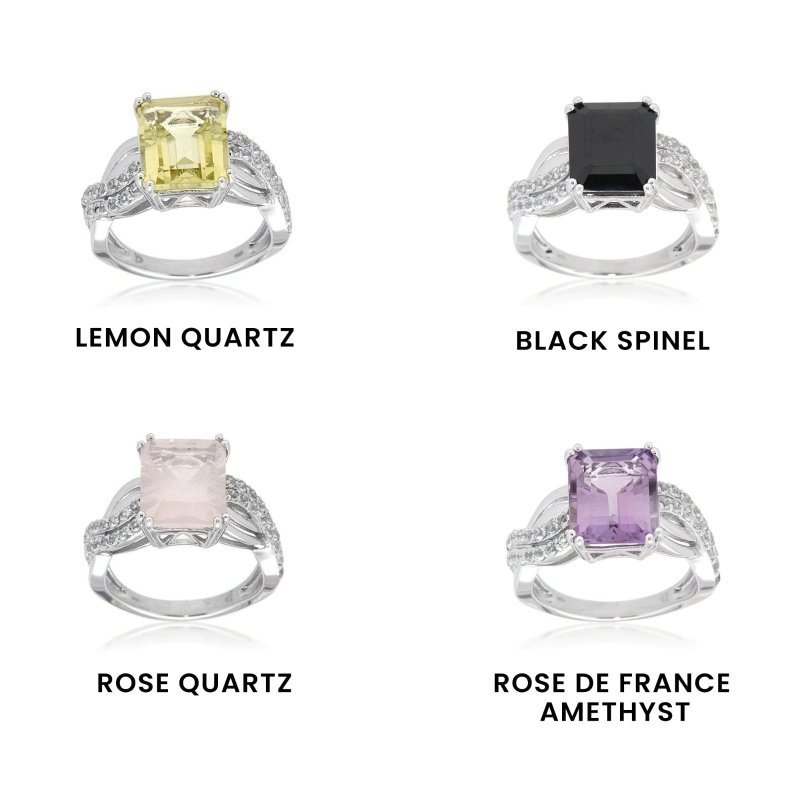
Ladies Sterling Silver Cocktail Ring

Ladies Oval Black Spinel Cocktail Ring

Black Spinel & White Topaz Ring

Ladies Heart Black Spinel Ring
Spinel FAQs
Is spinel a valuable gemstone?
Fine red, hot pink and cobalt blue spinel can be valuable, especially above a few carats. Paler or greyish stones are more affordable.
Is spinel the same as ruby?
No. They are different minerals, though both can be red and both get their colour from chromium. Spinel is single refractive and ruby is double refractive, which a gemmologist can test quickly.
Is spinel a birthstone?
Yes. Spinel was added as an August birthstone in 2016, alongside peridot and sardonyx.
How do I know if a spinel is natural or synthetic?
Synthetic spinel is common and inexpensive. A gem lab can separate them by inclusions and spectroscopy, which matters most for colourless and cobalt blue stones.
Is spinel good for an engagement ring?
Yes. At 8 on the Mohs scale with no cleavage, spinel is durable enough for daily wear in a well-made setting.
Checked against
Every fact on this page was checked against these references. Gem science moves on, so if you spot something out of date, tell us.
- SpinelGIA Gem Encyclopedia
- Spinel History and LoreGIA
- Spinel Value, Price, and Jewelry InformationInternational Gem Society
- Spinel gemstone informationGemdat.org