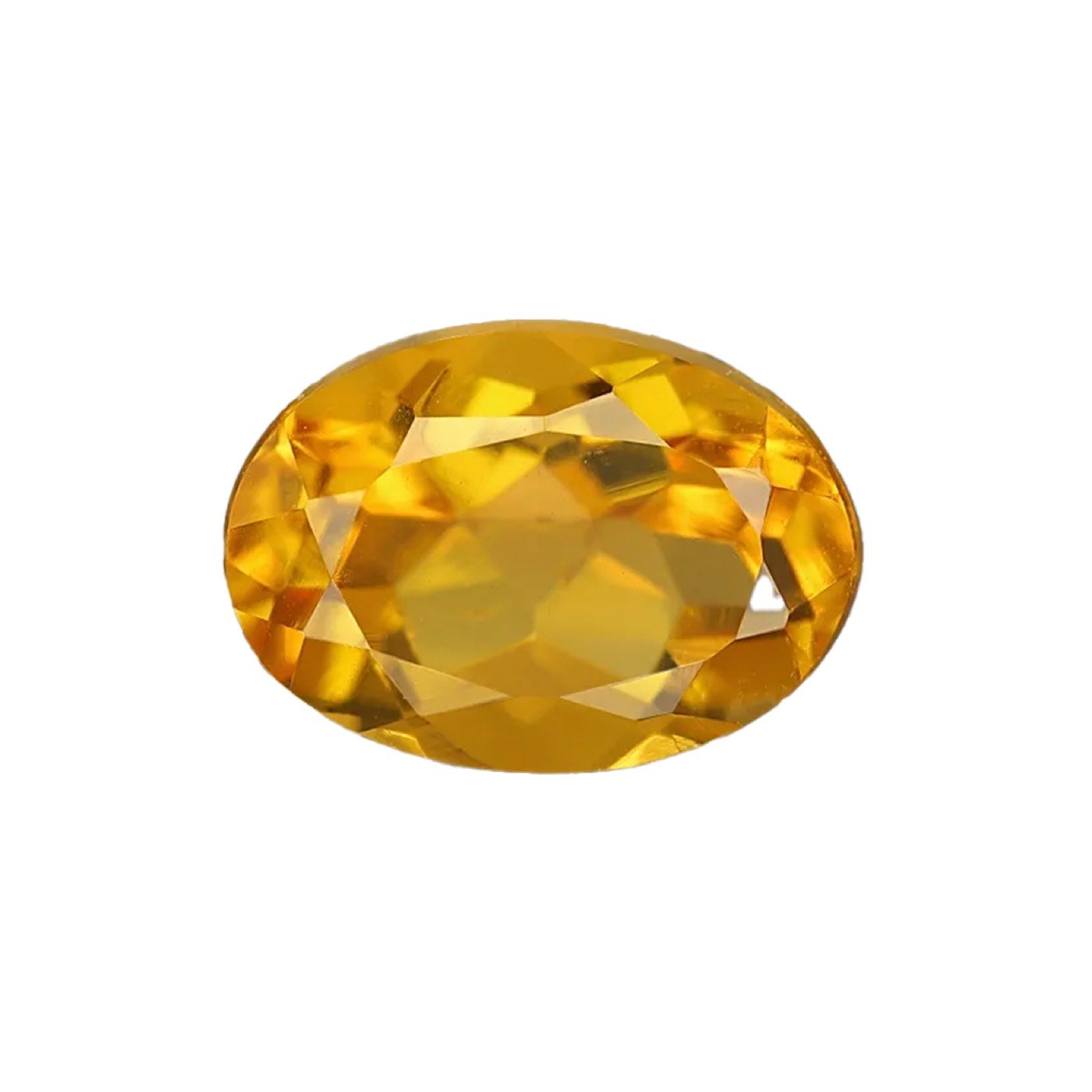
Why most citrine was once purple
Here is the quiet secret of the citrine trade: natural citrine is rare. According to the GIA gem encyclopedia, most citrine sold today is amethyst that has been heated. Giant hollow amethyst geodes from Brazil supply much of the raw material.
The trade accepts this openly, and the heating usually happens at or near the mine. Heated smoky quartz tends to give light to medium yellows, while heated amethyst gives the stronger shades, from orange-red to orangey brown. Either way, the result is still quartz, with the same hardness and wearability.
In Bolivia, nature sometimes stops halfway. Amethyst and citrine grow together in a single crystal, and the result is cut and sold as ametrine, half violet and half gold.
Citrine stone meaning: a name that means yellow
The word citrine comes from the old French citrin, meaning yellow, and colour has always been the point. For a long time the stone traded under borrowed names. Labels such as "Brazilian topaz" and "Madeira topaz" were common, and citrine is still mistaken for topaz today. They are different minerals: topaz is harder and more brilliant.
Its history as a carved gem is long. The International Gem Society illustrates a citrine intaglio of Dionysus from the Hellenistic period, in the first century BCE. GIA notes that citrine jewellery from the Victorian era survives too, so people were prizing it long before laboratories could explain its colour.
Today citrine shares the November birthstone with topaz and is the gem for a 13th wedding anniversary. Much of the meaning attached to citrine online is modern folklore. We prefer to talk about what you can see: colour, light and how the stone wears.
From Madeira orange to lemon yellow
Citrine runs from pale straw through golden yellow to a rich orange with red flashes. That last shade is called "Madeira" in the trade, a colour name rather than a place of origin. It comes from heating stones with the right iron content, and because there is no simple test for iron in advance, processors watch the heating closely.
Virtually all natural citrine comes from Brazil, with smaller sources including Bolivia, Madagascar, Zambia, Namibia, Russia and the United States. Bright greenish yellow "lemon quartz" is a different product again: colourless quartz that has been irradiated and then heated. You will find all these shades among cut and polished gemstones for the trade.
The facts
- Mineral family
- Quartz
- Chemical formula
- SiO₂
- Mohs hardness
- 7
- Refractive index
- 1.544–1.553
- Specific gravity
- 2.65
- Crystal system
- Trigonal
- Colours
- Pale yellow, golden yellow, orange, reddish orange ("Madeira")
- Main sources
- Brazil (most), Bolivia, Madagascar, Zambia, Namibia, Russia, USA
- Birthstone
- November (with topaz)
- Common treatments
- Heating of amethyst or smoky quartz; irradiation and heating of colourless quartz ("lemon quartz")
What makes a good citrine
Colour leads value. A saturated golden yellow to reddish orange without muddy brown tones usually sits at the top, and value falls as the colour pales. Citrine is normally eye clean, so visible inclusions count against a stone. Large sizes are easy to find and the price per carat does not climb steeply with weight, which makes citrine a sensible choice for bold cocktail rings and pendants.
Cut matters more than people expect. Quartz has a modest refractive index, so a well proportioned stone without a dull window in the centre looks far livelier than a shallow one.
- Look for even colour with no muddy brown zones
- Tilt the stone and check the centre for a dull, see-through window
- Ask whether it is heated, natural or lab grown
- Lab-grown hydrothermal citrine exists; a gem laboratory can confirm origin
- Glass imitations often show gas bubbles, swirl marks or moulded facet edges
- Names like "Madeira topaz" describe citrine, not topaz
Keeping it beautiful
At 7 on the Mohs scale, citrine is hard enough for everyday rings, earrings and bracelets. It can still chip with a hard knock, so take rings off for the gym, gardening or heavy work.
Heat is the main risk. Heat-treated stones may fade if exposed to high temperatures, so keep citrine away from steam cleaners and boiling water. Stones with many inclusions are best cleaned by hand.
- Clean with warm water, mild soap and a soft brush
- Avoid steam cleaning, boiling and sudden temperature changes
- Hand clean included stones rather than using an ultrasonic cleaner
- Store apart from harder gems to avoid scratches
Citrine, from D’sire
Citrine is one of the warm quartzes we work with most at our Hong Kong bench. We supply cut and calibrated stones and citrine strands to the trade, and with three decades of sourcing behind us we can source and cut it to your sizes for a private label line, a bespoke piece or a remade family heirloom.

Ladies Natural Citrine & White Topaz Quatrefoil Ring

Ametrine
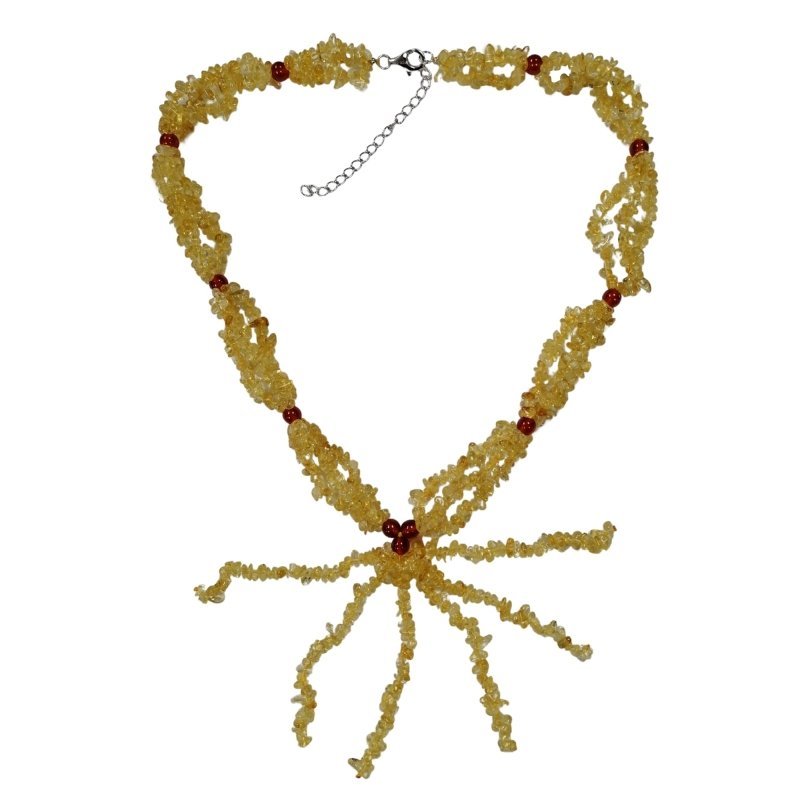
Citrine & Red Agate Gemstone Tassel Necklace


Lavender Amethyst & Citrine Knotted Necklace

Citrine FAQs
Is citrine natural or heat treated?
Most citrine on the market is heated amethyst or smoky quartz. Natural, untreated citrine exists but is rare, and the trade accepts heated stones as citrine.
What is the citrine stone meaning?
The name comes from the old French citrin, meaning yellow. Much of the meaning attached to citrine online is modern folklore; historically it was valued as a golden stone for carving and jewellery.
How can you tell real citrine from fake?
Glass imitations often show gas bubbles, swirl marks or soft, rounded facet edges. Lab-grown citrine is harder to separate, so for an important purchase ask for a report from a gem laboratory.
Is citrine the November birthstone?
Yes. Citrine shares November with topaz, and it is also the traditional gem for a 13th wedding anniversary.
What affects citrine value and price?
Colour drives value: deep golden to reddish orange stones without brown tones sit at the top. Clarity and cut follow, while size adds less to the price per carat than it does for most gems.
Checked against
Every fact on this page was checked against these references. Gem science moves on, so if you spot something out of date, tell us.
- CitrineGIA Gem Encyclopedia
- Citrine history and loreGIA
- Citrine value, price and jewelry informationInternational Gem Society
- Citrine gemstone informationGemdat.org