
A red thread through history
Garnet is one of the oldest gems people have worn. Red garnet necklaces went into Egyptian tombs with the pharaohs, and Roman officials pressed carved garnet signet rings into the wax that sealed important documents. In Pliny the Elder’s time, red garnets were among the most widely traded gems in the Roman world.
The Staffordshire Hoard shows how far those stones travelled. Conservators at Birmingham Museums found that the very small garnets came from what is now the Czech Republic, while the larger cut stones came from the Indian subcontinent. Seventh-century goldsmiths in England were setting gems that had crossed half the known world.
Around 1500, rich garnet deposits were found in Bohemia in central Europe. They fed a regional jewellery industry that peaked in the late 1800s, which is why so many antique pieces are crowded with small, dark red stones. If you have one of these family pieces, our heirloom care team sees them often.
Garnet stone meaning: a family, not a single gem
Garnet is not one mineral but a group of closely related ones that share the same cubic crystal structure. There are more than twenty species, and five matter most for jewellery: pyrope, almandine, spessartine, grossular and andradite. Many stones are natural mixtures of two or more.
That family explains the colour range. Almandine and pyrope give the classic wine reds. Rhodolite is a purplish red. Spessartine glows orange, and the vivid stones sometimes called “mandarin” are some of the most sought after. Hessonite is a warm cinnamon. A few rare garnets even change colour between daylight and lamplight, much like alexandrite.
The ancients had no way to tell these apart from other red gems. The old word “carbuncle” covered almost any red stone, garnet included, and fine red spinel and ruby were often lumped in with it.
The green garnets that changed the story
For collectors, the greens are where garnet gets exciting. Demantoid, a green andradite, has more fire than diamond and was a favourite of the Russian jeweller Fabergé. Its signature is the “horsetail”, a fan of fine fibrous inclusions that can actually raise a stone’s value rather than lower it.
Tsavorite, a green grossular, is younger in the trade. It was mined by the geologist Campbell Bridges in Kenya, near Tsavo National Park, which gave the stone its name. It is rare, bright and rarely treated, and it is often the most valuable grossular you will find.
The facts
- Mineral family
- Garnet group (pyrope, almandine, spessartine, grossular, andradite and others)
- Chemical formula
- X₃Z₂(SiO₄)₃, varies by species
- Mohs hardness
- 6.5–7.5
- Refractive index
- About 1.72–1.89, varies by species
- Specific gravity
- About 3.5–4.3, varies by species
- Crystal system
- Cubic (isometric)
- Colours
- Red, purplish red, orange, pink, yellow, green, brown, rare colour-change
- Main sources
- Found worldwide; notable gem sources include India, Sri Lanka, Kenya, Tanzania, Madagascar, Russia and Vietnam
- Birthstone
- January
- Common treatments
- Rarely treated
What makes a good garnet
Garnet value is set variety by variety, but the same four things drive it: colour, clarity, carat weight and cut. Red almandine and pyrope are plentiful and affordable, often eye-clean, which makes them a sensible choice for a private label jewellery line. Fine orange spessartine, demantoid, tsavorite and strong colour-change stones sit at the top of the range.
Look for a lively, saturated colour that does not go black or brown in low light. Dark red garnets can look inky in larger sizes, so a shallower cut or a smaller calibrated size often shows them better. Most garnets are not treated, which keeps buying simple.
- Judge colour in daylight and indoors: good red should stay red, not turn black
- Expect red garnets to be eye-clean; demantoid is the exception, where horsetails are prized
- Ask the species or variety name, as value differs widely between them
- Garnet is single refractive, so a gem tester or lab can quickly separate it from ruby
- Watch for red glass and doublets with a thin garnet top, sold as solid garnet
Keeping it beautiful
Most garnets sit at 6.5 to 7.5 on the Mohs scale and have no cleavage, so they suit everyday rings, earrings and pendants. Demantoid is the softest of the family and deserves a protective setting in a ring.
- Clean with warm soapy water and a soft brush
- Store apart from diamonds and sapphires, which can scratch it
- Avoid sudden temperature changes, which can crack included stones
- Have ring claws checked once a year
Garnet, from D’sire
Garnet is one of the most versatile stones a jewellery line can use. From our bench in Hong Kong, with three decades of sourcing and cutting behind us, we supply cut and calibrated stones and strands to the trade, and we can source and cut garnet to your sizes for a private label collection or a bespoke piece.

Sterling Silver Spessartite Garnet Earrings
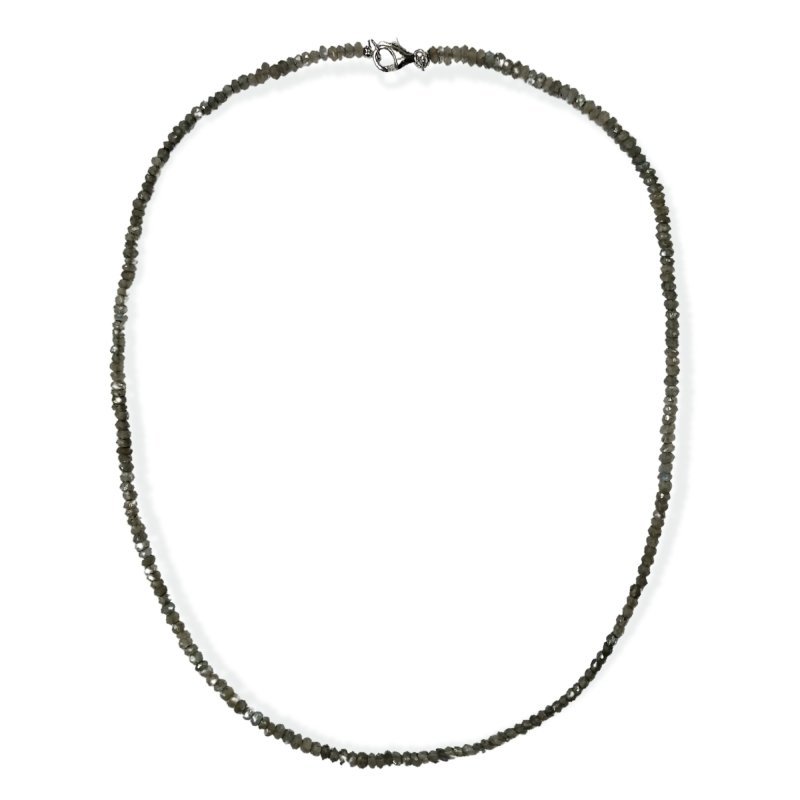


Natural Hessonite Triple Strand Chips Necklace with Sterling Silver Clasp
Garnet FAQs
What does the garnet stone mean?
Garnet is the January birthstone and the gem for a second wedding anniversary. Historically it was carried and worn across Egypt, Rome and Anglo-Saxon England, and that long history is a big part of its appeal.
Are garnets valuable?
Most red garnets are affordable because they are plentiful. Rare varieties such as demantoid, tsavorite, fine spessartine and colour-change garnet can command high prices per carat.
Are garnets only red?
No. Garnet comes in almost every colour, including orange, pink, yellow, green and even rare colour-change stones. Blue is the rarest.
How can I tell if a garnet is real?
Real garnet is single refractive and denser than glass, and a gemmologist can confirm it in minutes. Watch for glass imitations and doublets with only a thin garnet top.
Can you wear a garnet ring every day?
Yes, most garnets are hard enough at 6.5 to 7.5 on the Mohs scale. Choose a protective setting for softer demantoid and remove rings for heavy work.
Checked against
Every fact on this page was checked against these references. Gem science moves on, so if you spot something out of date, tell us.
- GarnetGIA Gem Encyclopedia
- Garnet History and LoreGIA
- Garnet DescriptionGIA
- Is Garnet Expensive?International Gem Society
- Garnet Group gemstone informationGemdat.org
- The science behind the Staffordshire HoardBirmingham Museums Trust